

Nebulizer buying guide: what should you consider before buying?
Choosing a nebulizer is not just about the price or appearance of the device. The type of technology, the length of each session, noise level, portability, how it is cleaned and even the availability of spare parts can all influence the final choice. That is why, if you plan to buy a nebulizer for home use, it is best to define your needs and those of the person who will use the device before choosing a model.
In this nebulizer buying guide, we review the most important points to consider when choosing a device; we invite you to stay with the Parsian Teb medical equipment store for the rest of this article!
Types of nebulizers and how they differ
A nebulizer turns liquid medication into very fine particles so the person can inhale it through a mask. Nebulizers do not all work with the same technology and generally fall into three main groups.
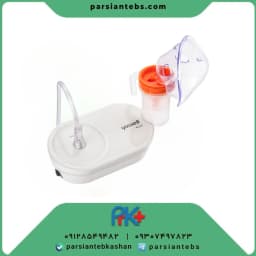
Compressor nebulizer
A compressor (or jet) nebulizer uses a stream of compressed air to turn the medication solution into inhalable particles. This type is one of the common options for home use and usually has a simpler design.
On the other hand, the compressor can make the device noisier than some other types. So if the device will be used for a child or during rest hours, be sure to check its noise level.
Mesh nebulizer
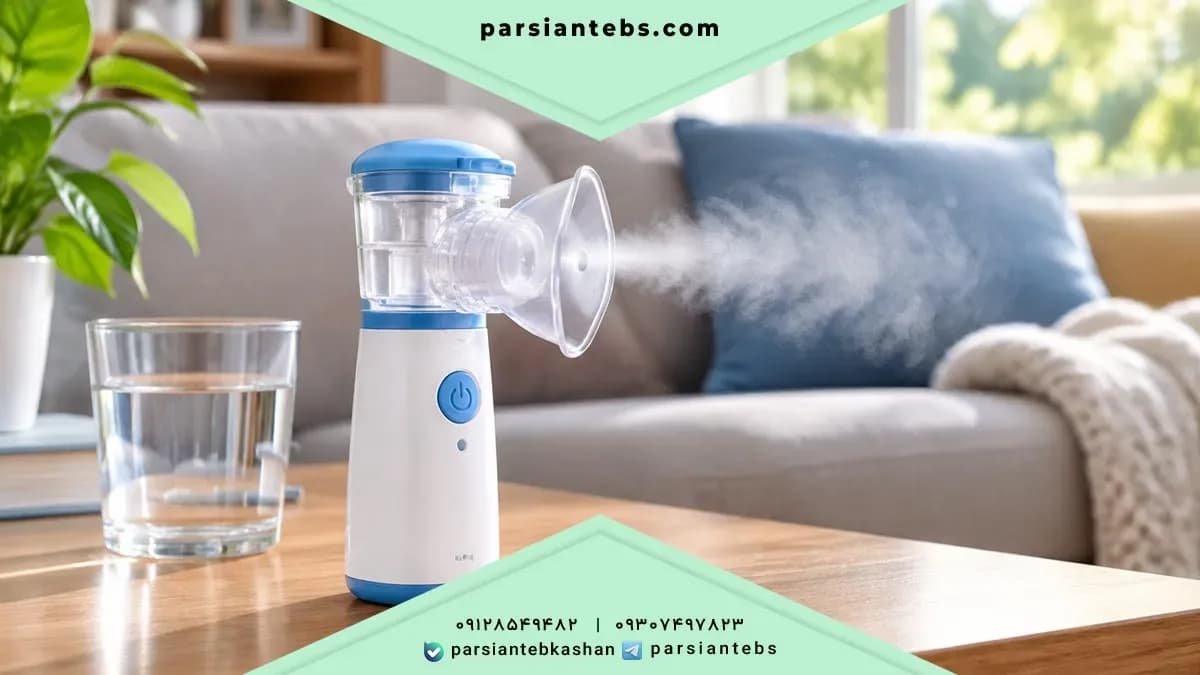
In a mesh nebulizer, the medication passes through a very fine mesh and is turned into inhalable particles. Its small size, light weight and low noise make this type an attractive option for people for whom moving the device around matters.
That said, when buying a mesh nebulizer you should check the device's compatibility with the solution or medication prescribed for the person, as well as the availability of its consumable parts.
Ultrasonic nebulizer
An ultrasonic nebulizer uses high-frequency vibrations to turn the liquid into fine particles. This type can also be relatively quiet, but not all medications and solutions are suitable for use in every ultrasonic device.
What role does particle size play in choosing a nebulizer?
One of the important technical specifications in any nebulizer selection guide is the size of the particles the device produces. For the medication to reach the intended part of the respiratory system, it must be turned into particles of a suitable size.
However, you should not assume that the smaller the particles, the better the device. Actual performance depends on the type of medication, the device design and the way the aerosol is produced. That is why, rather than choosing a device based on a single number, it is better to review its full set of technical specifications.
Nebulizer speed and session length
The time you need for each use of the device matters a great deal in everyday use. A device that nebulizes the medication at a suitable speed can make treatment easier for the patient.
The product's technical specifications usually include information about the nebulization rate, or how fast the solution is turned into aerosol. This feature becomes especially important when the device is going to be used several times a day.
Even so, a higher speed alone does not make a nebulizer the best one. The device's performance, the amount of residual medication, the type of technology and its compatibility with the medication being used also matter.
Do not overlook noise level when buying a nebulizer
The noise of the device may seem like a minor feature at first glance, but with regular use it can have a big impact on the patient's experience. For example, if you are buying a nebulizer for a child, loud noise may frighten or unsettle them. For night-time use, a quieter device is also usually the more comfortable choice.
On the other hand, if the nebulizer is only used occasionally and during the day, noise level may matter less than price, the device's power or the availability of parts.
Home or portable nebulizer: which option is more suitable?
If the device will mostly be used at home in one fixed place, a home nebulizer can be a good choice. These models are usually designed to be used on a stable surface, and some of them run on mains electricity.
But if the person regularly moves between home and work or needs the device while traveling, a portable nebulizer has more advantages. In this case you should check the weight, dimensions, type of power supply and whether it can run on batteries.
So when choosing a nebulizer, first consider where the device will mostly be used and how much it will need to be moved.
Check the medication chamber and the device's parts
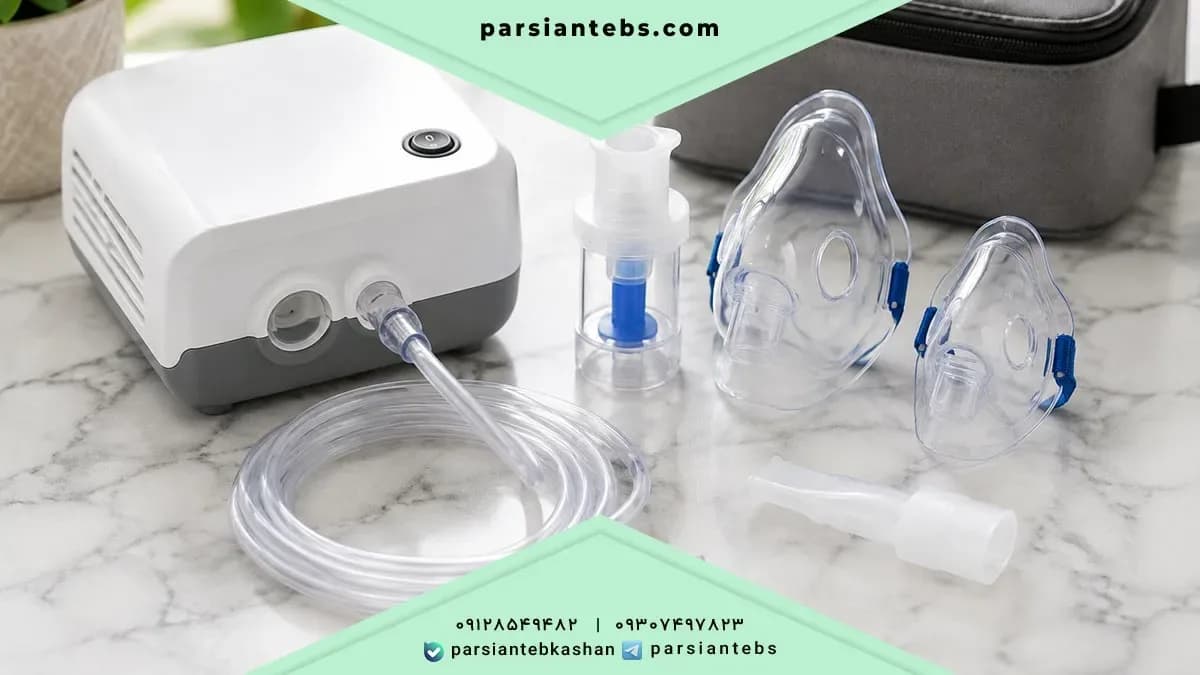
When buying a nebulizer, do not examine only the device itself. The medication chamber, tubing, mask or mouthpiece, filter and other included parts are also part of the user experience.
The medication cup should be easy to detach and clean, and its consumable parts should be available when needed. If the device is being bought for a child, the size and comfort of the mask become even more important.
It is also best to ask about the availability of spare parts before buying. A device whose main parts are hard to find may not be a good economical choice in the long run, even if its initial price is attractive.
What medication can be put in a nebulizer?
A nebulizer is used to deliver prescribed liquid medication to the respiratory system. Therefore, you should not put just any liquid, homemade solution or medication into its chamber without a doctor's advice.
The type of medication, and even whether a medication is suitable for a particular nebulizer technology, can vary. If you are unsure about using a particular solution, it is best to consult a doctor or pharmacist before use.
A nebulizer does not itself treat respiratory disease; its job is to deliver the medication that has been prescribed for the patient.
Which features matter most for children and the elderly?
When choosing a nebulizer for a child, mask comfort, noise level, device weight and a simple process of use are very important. A device that is long or complicated to use may make it harder for the child to cooperate.
For elderly users, it is also best to choose a model with simple controls whose preparation, use and cleaning steps are not complicated.
If the patient has mobility problems or physical weakness, the weight of the device and the arrangement of its parts should also be taken into account.
Summary
When buying a nebulizer, no single model can be named the best option for everyone. The right choice depends on the type of use, the prescribed medication, the patient's age, how much the device will be moved and the features required.
If you want a device for regular use at home, compressor models can be a practical option. If light weight, low noise and portability matter more to you, you can also consider mesh models. As for ultrasonic models, you should take into account the device's compatibility with the intended medication.
Ultimately, a suitable nebulizer is not simply the device with the most features; it is the model that matches the patient's real needs, the way the medication is taken and the conditions of everyday use.