
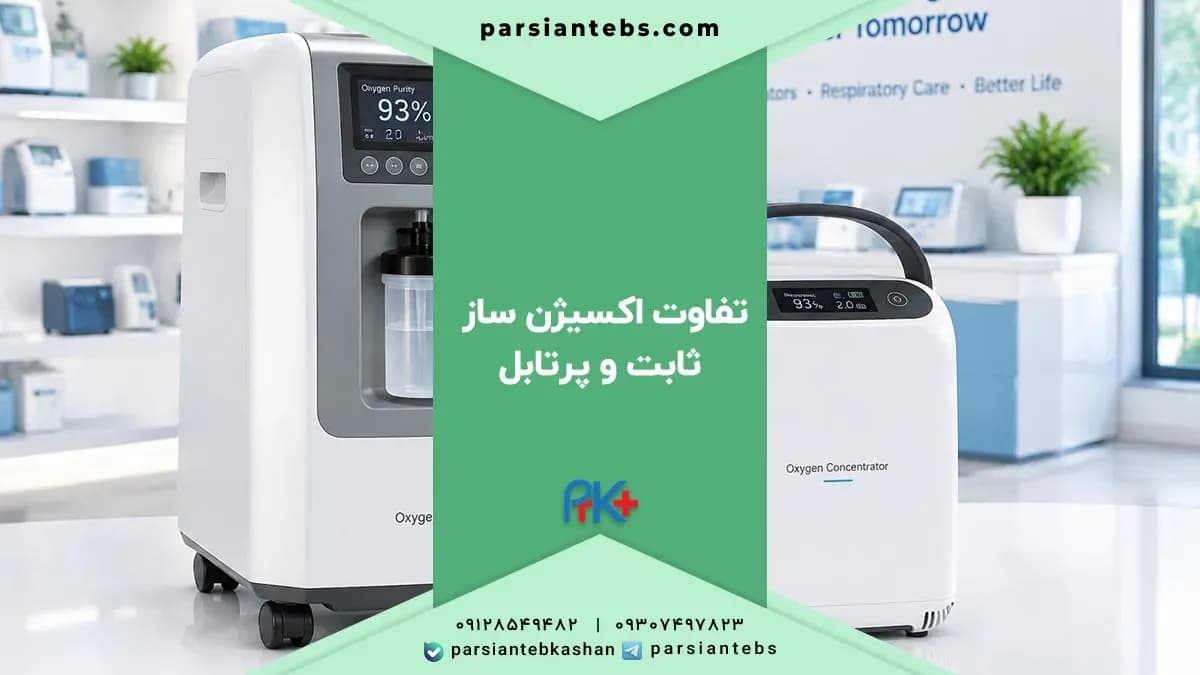
Stationary or Portable Oxygen Concentrator: Which Is Right for You?
Choosing between a stationary and a portable oxygen concentrator depends more on the patient's needs and how the device will be used than on its appearance or size. If the patient spends most of their time at home and needs long-term oxygen therapy, a stationary model is usually the more practical choice. On the other hand, if getting around, going out or traveling is important, a portable oxygen concentrator offers more freedom.
That said, no single model can be called better for every patient. The amount of oxygen needed, the type of oxygen flow, the duration of use and the patient's activity level should all be reviewed before buying.
Stationary vs. portable oxygen concentrators at a glance
Stationary and portable oxygen concentrators are both used to supply the oxygen a patient needs, but they are not designed for the same lifestyle. The stationary model is built mainly for use in one place, and the portable model for moving around.
Stationary oxygen concentrator | Portable oxygen concentrator | Criterion |
Use at home | Use at home and away from home | Main use |
Larger and heavier | Smaller and lighter | Weight and dimensions |
More limited | Easier | Mobility |
Usually mains electricity | Battery, mains electricity and, in some models, car power | Power source |
Depending on the model, continuous or pulse | Depending on the model, pulse or, in some models, continuous | Flow type |
Suitable in many models | Depends on the device's capacity and type | Long-term use |
Not suitable or difficult | Better suited to moving around | Travel |
Usually more affordable | Usually more expensive | Price |
Stationary oxygen concentrator: the right choice for home use
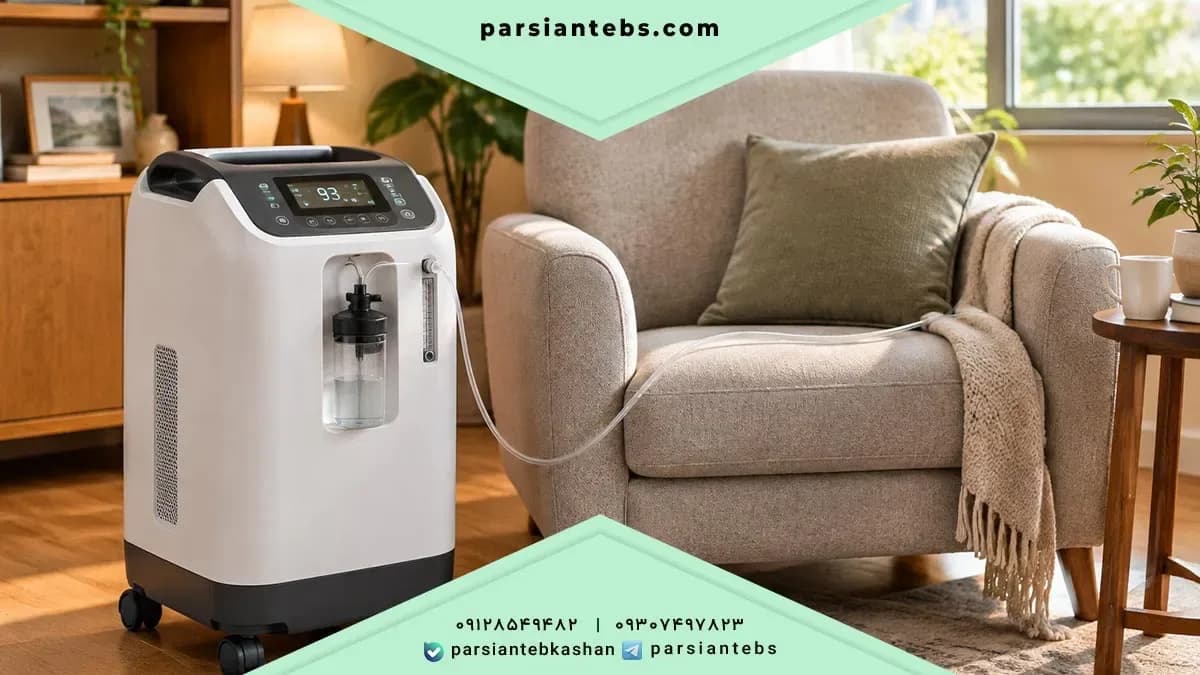
A stationary or home oxygen concentrator is designed to be placed in one fixed location. It usually runs on mains electricity, and many home models are built for long-term use.
Because of their larger size, stationary models usually sit on wheels so they can be moved from one room to another within the home. This mobility is not comparable to carrying a portable device, but it is sufficient for everyday use at home.
One important advantage of stationary models is the availability of continuous-flow options. In this mode, oxygen is delivered to the patient continuously at a set flow rate adjusted in liters per minute.
Portable oxygen concentrator: more freedom to get around
A portable oxygen concentrator is designed to reduce weight and increase portability. Its smaller size, battery and ability to be used in different settings make it more practical for people who are more active.
Depending on the model, a portable device can run on a battery, mains electricity or car power. Battery life is not fixed either; it depends on the battery capacity, the device settings and the conditions of use.

A portable model is most useful for people who:
· Need to leave the house regularly.
· Need oxygen during activity.
· Travel or commute as a regular part of their life.
· Find it difficult to carry a larger device.
Which model is the more sensible choice for nighttime use?
If the patient needs oxygen during the night as prescribed by their doctor, the device's flow type becomes more important. Many portable devices use pulse flow, and not all of them are suitable for nighttime needs or continuous flow.
For this reason, you cannot decide based on the words “portable” or “stationary” alone. First, you need to determine how much oxygen, and what type of oxygen delivery, the patient receives.
Which option is more practical for travel and outings?
In these situations, a portable model is usually the more convenient choice. Its lower weight and battery operation allow the patient to keep the device with them while getting around.
However, before traveling you should check the battery capacity, charging method, actual weight of the device and whether it can be used at your destination. If you are traveling by plane, the airline's rules and the approvals required for that specific model also matter.
It is also best for the patient to make sure before traveling that the portable device can meet their oxygen needs during activity. A patient's needs at rest are not necessarily the same as when walking or being active.
When is a portable unit not a suitable replacement for a stationary model?
If the patient needs continuous flow or a specific flow rate and the portable device in question cannot provide it, a portable model will not be the right choice.
This is especially important when the patient uses oxygen for most hours of the day and night. Some portable devices have limitations in output, flow type or battery life.
So the right decision is not to start by saying “I want a portable” or “I want a stationary unit.” It is better to first determine the oxygen requirement and then choose a device that can meet that requirement under real-world conditions of use.
5 key criteria for choosing between the two models
Before buying an oxygen concentrator, review these points side by side:
1. Amount of oxygen needed: the patient's required amount and flow rate should be clearly established.
2. Flow type: check whether the device offers continuous flow, pulse flow or both.
3. Duration of use: using the device for a few hours does not have the same requirements as round-the-clock use.
4. Amount of movement: if the device will mostly stay by the bed or in one room, weight matters less. For use outside the home, weight and battery become more important.
5. Service and technical specifications: check oxygen purity, noise level, alarm systems, warranty and after-sales service alongside the price.
How do the prices of stationary and portable oxygen concentrators differ?
The price of these two types of device depends on various factors such as brand, capacity, flow type, component quality, battery and features. Portable models are usually more expensive than many stationary models because of their compact design, battery and portability.
Therefore, comparing prices without considering technical specifications can be misleading. A cheaper model may not have exactly the capabilities the patient needs.
Summary
If the main goal is home use and receiving oxygen for long periods, a stationary oxygen concentrator will be the better choice in many situations. If the patient needs to leave the house regularly and portability matters to them, a portable oxygen concentrator is the more practical option.
However, the type of device must match the patient's actual needs. The amount of oxygen, flow type, duration of use, daily activity and the device's technical specifications all play a role in the final decision.
At Parsian Teb you can review the specifications of different devices according to your needs and, before buying, consider features such as output flow rate, flow type, weight, power supply and after-sales service.