
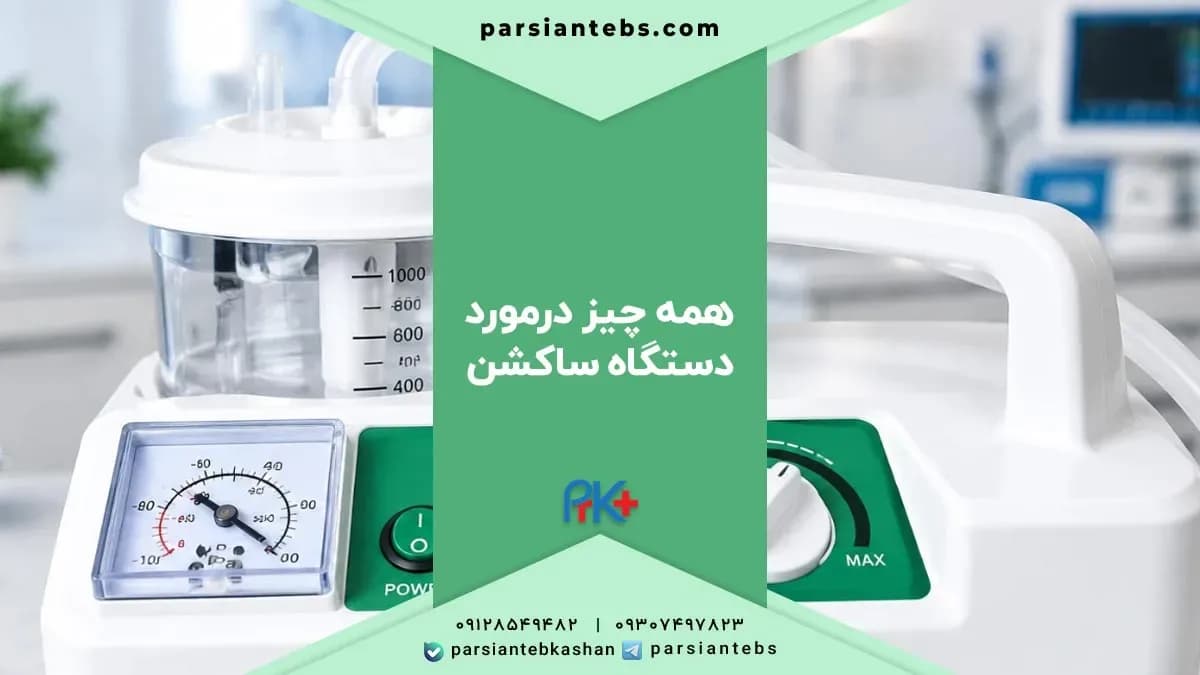
What Is a Suction Unit? Types, Uses, Components and Buying Guide
When a patient is unable to clear respiratory secretions, or blood and fluids need to be drained during certain medical procedures, a suction unit comes to the aid of the care team. But what is a suction unit and what exactly does it do?
By creating negative pressure, this device removes secretions, fluids and excess material from the target area, which is why it is used in hospitals, operating rooms, emergency departments, ambulances and, in some situations, at home. Read on in this article from the Parsian Teb Kashan medical equipment store to learn more.
What is a suction unit?
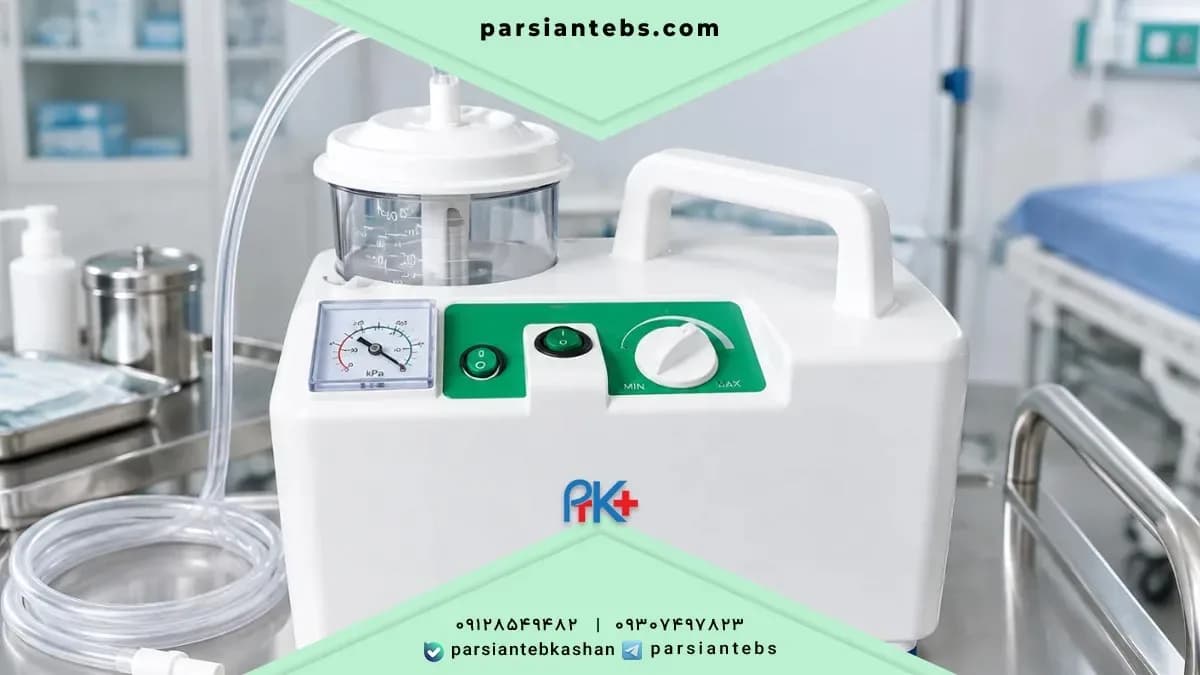
A suction unit, or medical aspirator, is a device that removes unwanted secretions and fluids from the target area by creating negative pressure. It is mostly used when the patient cannot adequately clear secretions on their own, or when blood and fluids need to be drained during certain medical procedures. Suction units are made in various models, such as hospital, portable, surgical and home units, and the choice of model depends on the type of application and the conditions of use.
The device usually consists of a pump, a collection canister, tubing, a filter and a pressure regulation system. The pump creates a vacuum that generates suction flow, and secretions enter the canister through the tube. A filter and an overflow protection system also help prevent fluids and contamination from reaching the internal parts of the device.
How does a suction unit work?
A suction unit works by creating negative pressure. Once the device is switched on, the pump removes the air inside the suction line, and the resulting pressure difference draws secretions toward the tube and the device's canister. The level of suction can also be adjusted depending on the type of device and its application.
Suction takes place along a defined path: first the tube or catheter is placed at the target area, then the device's pump creates negative pressure and the secretions are directed to the collection canister. The filter then prevents particles and contamination from entering the pump. For this reason, the condition of the tubes, filter, connections and canister has a direct effect on the correct performance of the device.
What does a suction unit remove?
A suction unit is designed to remove body secretions and fluids, and the type of material it can collect depends on the device model and its application. In healthcare settings, suction may be used under specific conditions to clear respiratory secretions, saliva, blood and certain body fluids.
The main materials that may be collected by a suction unit are:
· Respiratory secretions and mucus
· Saliva and oral secretions
· Blood during certain medical and surgical procedures
· Certain body fluids
· Secretions in the airways
What is a suction unit used for?
The main purpose of a suction unit is to create suction to remove secretions, blood and certain fluids from the target area. The device becomes especially important when the patient cannot clear secretions on their own, or when draining fluids is necessary to continue a medical procedure. This is why suction units are used in settings such as hospitals, emergency departments, operating rooms, intensive care units and, in special circumstances, at home.
What types of suction units are there?
Suction units can be classified by place of use, portability and power source. Portable suction units are designed to be moved easily, while stationary models are mostly used in healthcare facilities and settings that need a device with a fixed location.
On the other hand, suction units can be electric or manual, and some models are designed specifically for use in ambulances or operating rooms. So when choosing a suction unit, it is best to first determine the intended application and then review the device's technical features.
Portable suction unit
A portable suction unit is a lightweight type of medical suction equipment designed to be carried and used in different locations. Lower weight, compact dimensions and, in some models, battery operation make it a good option where a stationary suction unit is not available.
Portable suction units are used in home care, ambulances, patient transfer and some settings outside the hospital. However, technical specifications vary between models, and factors such as suction power, canister capacity, battery life and charging options should be reviewed when choosing one.
Stationary suction unit
A stationary suction unit is designed to be kept in a fixed location and is mostly used in hospitals, clinics and healthcare centers. These models are usually built for repeated use in clinical settings and, depending on the device, may offer greater capacity and more features than some portable models.
The main difference between stationary and portable suction units is how they are used and how easily they can be moved. A portable suction unit is designed for easy transport, while a stationary model is mainly used in one location with constant access to the device.
Electric suction unit
An electric suction unit uses an electric motor and pump to produce the negative pressure needed for suction. These models are the most common type of suction unit in many healthcare and care settings and can run on mains power or, in some models, on a battery.
The main advantage of an electric suction unit is the ability to provide stable, controlled suction. Different models are made for home, hospital, ambulance or surgical use, so being electric alone is not enough to choose a device; suction power, canister capacity and other specifications must also be reviewed.
Manual suction unit
A manual suction unit works without electricity or an electric motor, creating suction through mechanical or manual action. This makes it useful where electricity is not available or a portable device is needed.
A manual suction unit usually has a simpler design than electric models, but the level and continuity of its suction depend on the device's design and how it is used. For this reason, for specialized applications or patient care, the product specifications and instructions for use should be reviewed.
Ambulance suction unit
An ambulance suction unit is designed for use during patient transfer and in pre-hospital settings. In this environment, the device's weight and dimensions are very important, because equipment must be usable and movable within the limited space of an ambulance.
Battery operation is one of the key features of many ambulance models. Being able to use the device without a constant power connection makes it easier to move. Compared with a home suction unit, an ambulance model must be designed for mobile conditions and rapid use, and factors such as durability, battery life, suction power and easy access to the controls become more important.
Surgical suction unit
A surgical suction unit is designed for use in the operating room and in certain medical procedures, and its job is to drain blood, secretions and fluids from the target area. Some surgical models have higher suction power so they can perform well when the volume of fluid is greater.
When choosing a surgical suction unit, suction power is not the only consideration. Canister capacity, pressure adjustment, an overflow protection system, pump quality, the filter and the ability to run continuously also matter. These features should be chosen to suit the type of procedure and the needs of the healthcare facility so that the device can deliver stable and safe performance.
How is a suction unit different from an oxygen concentrator?
Suction units and oxygen concentrators are both medical equipment, but they have completely different functions. A suction unit removes secretions and fluids from the target area by creating negative pressure, whereas an oxygen concentrator is used to supply oxygen-enriched air and support patients' oxygen therapy. The two devices therefore cannot replace each other, and the choice between them should be based on the patient's medical needs or the healthcare facility's application.
What should you consider when buying a suction unit?
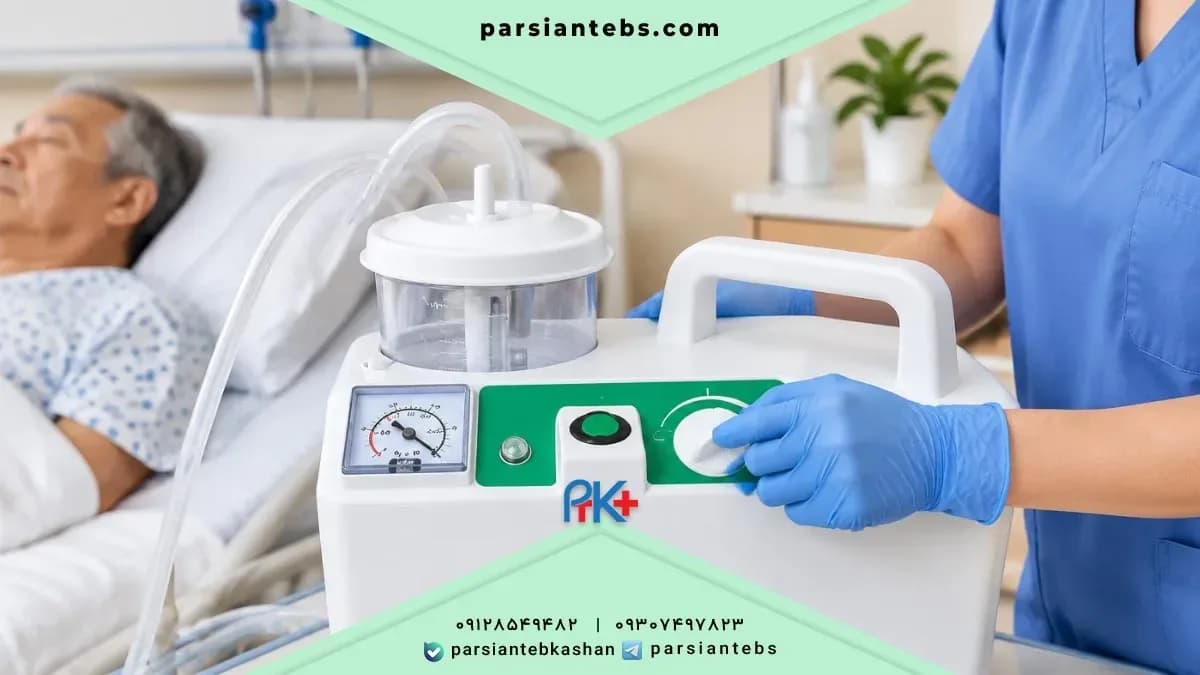
Choosing a suction unit is not just about suction power or price. The type of use, place of use, canister capacity, power source and safety features should also be reviewed. A device chosen for home care may differ greatly from what an operating room or ambulance needs.
When buying a suction unit, consider the following:
· Type of application: home, hospital, ambulance or surgical.
· Suction power and range: should suit the device's application.
· Pressure adjustment: should allow suction to be controlled.
· Canister capacity: should match the amount and type of use.
· Overflow protection system: should prevent fluids from entering the pump.
· Suitable filter: replacement filters should be available.
· Power source: mains, battery or both, depending on where it will be used.
· Battery life: very important for portable models.
· Noise level: worth checking for home or long-term use.
· Weight and dimensions: important for portable, ambulance and home models.
· Pump quality: affects the stability of the device's performance.
· Cleaning and maintenance: parts should be easy to wash and replace.
· Consumables: tubes, filters and canisters should be easy to obtain.
· Standards and certifications: verify the authenticity and specifications of the medical equipment.
· Warranty and after-sales service: important for devices in continuous use.
Summary
A suction unit is a practical piece of equipment for removing secretions, blood and certain fluids in medical situations. It works by creating negative pressure and, depending on its design, is used in hospitals, operating rooms, emergency departments, ambulances and some home care situations.
Suction unit models differ in suction power, canister capacity, portability, power source and application. For this reason, when buying a suction unit you should first determine where and how it will be used, and then review its technical features, safety features and the availability of consumables.
If you are unsure which suction unit to choose, it is best to compare the specifications of different models with your needs before buying. Parsian Teb offers specialist advice before you buy medical equipment, so you can choose a more suitable option based on your application and conditions of use.
· For advice and to review suction units, you can call Parsian Teb's specialists or submit a consultation request.
Frequently asked questions
What is a suction unit?
A suction unit is a medical device that removes secretions, blood and certain fluids from the target area by creating negative pressure.
Which patients is a suction unit used for?
In some patients who cannot adequately clear respiratory secretions, suction may be used to clear secretions in accordance with the care team's advice and training.
What should you consider when buying a suction unit?
The type of application, suction power and range, canister capacity, power source, overflow protection system, pump quality and the availability of consumables are among the most important things to review.
Recommended suction units and tips before ordering
Before buying, determine whether the device is needed for oral suction at home, patient transfer, a doctor's office or hospital use. The adjustable pressure range, suction flow rate, canister capacity and material, overflow protection, filter, noise, battery operation and the availability of Yankauer tips and tubing should be reviewed according to the application.
More power is not always the better choice. Suction pressure and technique must be set by a trained person; prolonged or deep suction can damage tissue. For home use, ask the specialist before delivery to train you on assembling the canister, setting the pressure, responding to overflow, cleaning and when to replace parts.
A suction unit is not suitable for removing a solid object stuck in the throat. In case of choking, bluish skin, reduced consciousness, bleeding or severe breathing problems, call emergency services immediately.
Reliable sources and review date
This article was reviewed using the official sources below. Last content review: 23 Mordad 1405.