

What Is an Alternating-Pressure Air Mattress? A Guide to Use, Adjustment and Bedsore Prevention
An alternating-pressure air mattress is an inflatable support surface that reduces the body's continuous contact with any one point by periodically changing the pressure in its chambers or cells. For some people with limited mobility or at risk of pressure ulcers, it is part of a prevention or treatment plan, but on its own it does not heal ulcers and does not replace repositioning, skin checks, nutrition and moisture control.
The type of mattress and the care plan should be chosen by a trained person based on a risk assessment, weight, mobility, skin condition and the presence of any ulcer. A patient with an open wound or persistent skin discoloration needs a clinical assessment.
What Is an Alternating-Pressure Air Mattress? Everything About Air Mattresses and Bedsore Prevention
Restful sleep, quality rest and a healthy spine are key prerequisites for good health and physical recovery. However, when illness, old age, major surgery or mobility injuries leave a person bedbound and housebound for days, weeks or months, the bed can turn from a place of rest into a high-risk surface for severe skin damage.
Bedridden patients who cannot move independently or change their body position are constantly at risk of developing bedsores (Bedridden Pressure Ulcers) or pressure injuries. The concentrated, prolonged pressure of body weight on areas such as the tailbone, the sacrum, the pelvis, the heels, the ankles, the elbows and the shoulder prominences blocks the capillaries that supply the tissue and, without evidence-based care, leads to tissue death and very deep, costly wounds.
In modern medicine, the pressure-relief mattress, or alternating-pressure air mattress (Alternating Pressure Air Mattress), is one of the most essential and life-saving pieces of equipment for reducing this risk. By dynamically distributing weight and cyclically changing pressure, these mattresses keep oxygen flowing to the tissues. In this complete reference guide from the Parsian Teb online store and medical equipment service center,we take a detailed look at how alternating-pressure mattresses work, the types of models, technical features, correct installation, pressure adjustment, common care mistakes and key points to consider when buying.
What is an alternating-pressure air mattress and what is it used for?
An alternating-pressure air mattress is an advanced medical and ergonomic support surface designed to maintain the natural alignment of the spine, reduce musculoskeletal pain and, above all, prevent skin damage caused by localized pressure.
These mattresses are not made only for seriously ill patients; they serve two broad types of use:
1. Orthopedic and comfort use: for people suffering from chronic low back pain, neck and shoulder pain, muscle fatigue or joint stiffness, a suitable surface can reduce pressure on the vertebrae through optimal spinal support and improve sleep quality.
2. Care and clinical use (bedsore prevention): connected to a quiet compressor or air pump, the alternating-pressure mattress directs compressed air to different sections of the mattress. Automatic, periodic changes in air pressure keep the patient's body from resting on one fixed point, thereby counteracting the risk of ischemia (reduced local blood supply).
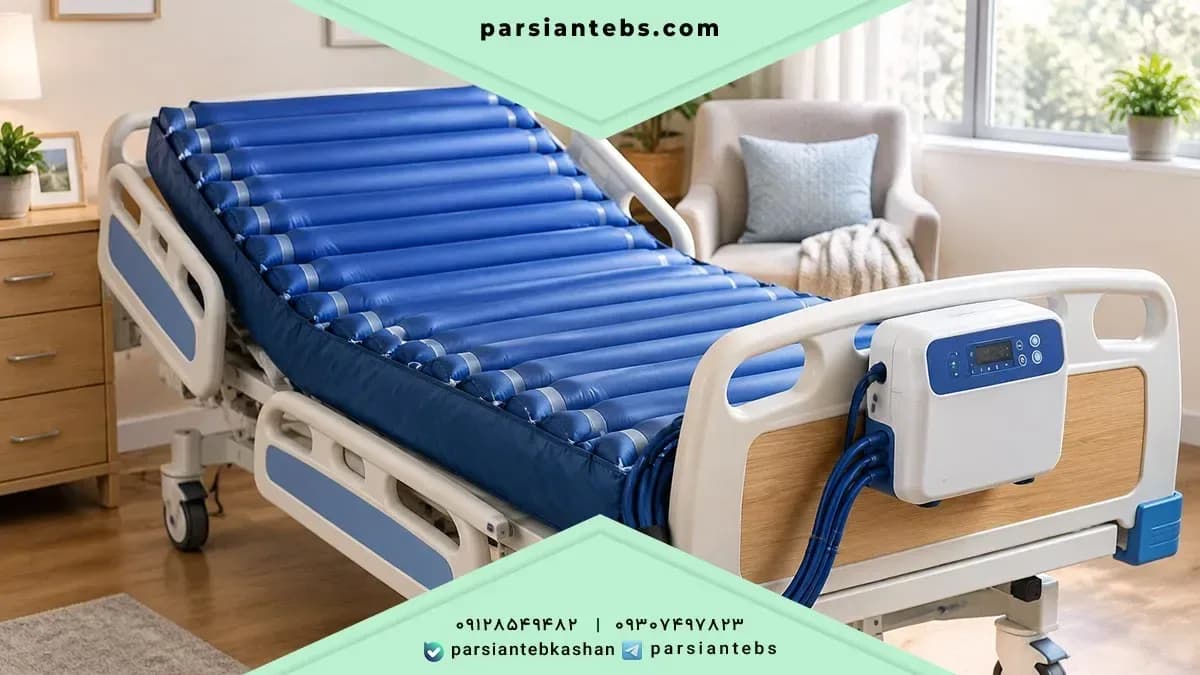
How does an alternating-pressure air mattress work? (The alternating pressure mechanism)
The way an inflatable alternating-pressure mattress works is based on an alternating air cycle of inflation and deflation:
Alternating deflation and inflation of channels: the air pump moves air in an alternating pattern (odd and even cells) through two or more hose lines at set intervals (usually every 5 to 12 minutes).
Relieving weight-bearing areas: while the cells in row “A” are inflated, they bear the body's weight; at the same time, the cells in row “B” deflate and the skin tissue resting on them is relieved so that blood, oxygen and nutrients can reach the underlying tissues. A few minutes later, the process is repeated in reverse.
Effectiveness depends on continuous operation: the system must stay on continuously and stably, in line with the catalog specifications, so that dynamic pressure stays active for all 24 hours of the day.
Which patients definitely need an anti-bedsore mattress?
Ordinary mattresses concentrate body weight on a uniform, non-moving surface, which for incapacitated people means tissue breakdown can begin in less than 48 to 72 hours. Using an alternating-pressure, pressure-relief mattress is vital for the following groups:
Long-term bedridden patients: people with little mobility who spend most of the day in bed or on hospital beds.
Frail older adults: older people who, because of advanced age, muscle weakness, severe frailty or osteoporosis, cannot turn over or move independently in bed.
Patients recovering from surgery: patients who have had bone, joint, heart or neurosurgery and have been prescribed strict bed rest by their physician.
People with spinal cord injury, stroke or muscle paralysis: those who do not feel pain and pressure because nerve signals are interrupted, and whose bodies show no protective reflex to shift position.
People with a history of bedsores: tissue that has once had a pressure ulcer loses its original elasticity, and the likelihood of the injury returning or recurring is much higher.
Patients with urinary or fecal incontinence: constant dampness, warmth and moisture make the skin thin and vulnerable (Maceration); in these conditions, the pressure relief provided by an alternating-pressure mattress prevents rapid breakdown of the dermis and epidermis layers.
Patients with severe malnutrition, extreme thinness or obesity: in very thin people, the bones press directly against the skin, and in people with obesity, the heavy body mass worsens blood vessel compression.
Types of alternating-pressure and pressure-relief mattresses for bedridden patients

Understanding the structure, weight capacity and type of operation of these mattresses helps you choose an optimal, effective option suited to the patient's needs:
┌─ Egg-crate alternating-pressure mattress (bubble / honeycomb)
├─ Cellular alternating-pressure mattress (tubular / channel)
Types of pressure-relief mattresses ──────┼─ Foam pressure-relief mattresses (no pump / memory foam)
└─ Advanced surfaces (continuous low pressure, automatic, ICU)
1. Egg-crate alternating-pressure mattress (Bubble / Waffle Mattress)
This model, also known as the honeycomb or basic mattress, is the most widely used and most economical anti-bedsore mattress in home care:
Structure: its surface consists of hundreds of small, connected bubbles resembling an egg carton, which inflate alternately.
Ideal use: suitable for patients at low to moderate risk of bedsores, patients bedridden for a short period (a few weeks up to a maximum of 2 to 3 months), or patients with partial mobility.
Weight capacity: it usually performs well up to a maximum weight of 80 to 90 kilograms (always check the specifications on the box).
Advantages: very light weight, quick setup, negligible power consumption and an economical price.
2. Cellular or tubular alternating-pressure mattress (Cellular / Tubular Air Mattress)
A model with much higher mechanical and medical efficiency, used for advanced and semi-specialized care:
Structure: these mattresses are made of 16 to 24 separate, parallel air tubes or cylinders. Each tube acts as an independent inflatable cylinder.
Ideal use: suitable for patients bedridden for long periods (more than a few months or years), completely immobile patients or those with spinal cord injury, and cases where early signs of pressure ulcers (stage 1 and 2) have appeared.
Weight capacity: they have a high capacity, and standard models usually support from 100 to 140 kilograms (and more in bariatric models).
Advantages: if one tube tears or is punctured, there is no need to replace the whole mattress; that cell alone can be replaced. Most of these mattresses are equipped with a CPR safety valve (rapid deflation in a cardiac arrest emergency) and a static mode (holding all cells fixed for dressing changes and care).
3. Foam pressure-relief mattress (Static Medical Foam Mattress)
Foam mattresses are support surfaces that require no air pump or electricity:
Structure: these mattresses are made from high-resilience compressed medical foam, medical memory foam or latex, and have ergonomic cuts (castellated or grooved).
Use: they are suitable for people who need better pressure distribution than an ordinary mattress but can still change position in bed, and for patients who cannot tolerate the vibration or noise of an air mattress compressor.
Advantages: completely silent, no dependence on electricity, zero risk of punctures and a very long service life.
4. Advanced and highly specialized support surfaces
These devices are equipped with continuous low air loss technology (Low Air Loss), automatic lateral patient rotation systems (Lateral Rotation), smart sensors that automatically adjust pressure to weight, and microclimate management systems (managing skin sweating and temperature). These systems are used in hospitals and in ICU and CCU wards to manage severe grade 3 and 4 ulcers.
Complete comparison table of support surfaces and alternating-pressure mattresses
Feature / model | Ordinary mattress | Egg-crate alternating-pressure mattress | Cellular/tubular alternating-pressure mattress | Foam pressure-relief mattress |
|---|---|---|---|---|
Type of operation | Simple static | Alternating bubble inflation | Alternating cylindrical tube inflation | Foam elasticity and weight distribution |
Bedsore risk level | Healthy people/very short bed rest only | Low to moderate risk | Moderate to very high risk | Low risk, skeletal pain |
Length of bed rest | Short-term | Short- to medium-term (a few months) | Long-term and indefinite | Medium- to long-term |
Patient weight capacity | Standard for most people | Limited (usually up to 80-90 kilos) | High (100 to 140+ kilograms) | Depends on foam density |
Cell repairability | None | Needs patching with adhesive | Easy single-cell replacement | None |
Requires electricity and a pump | No | Yes (continuously, 24 hours a day) | Yes (continuously, 24 hours a day) | No |
Suitable for an active bedsore | No (not allowed) | Prevention stage / grade 1 ulcer | Grades 1 and 2, and helps manage 3 | Prevention stage |
Does an alternating-pressure mattress alone heal bedsores?
One of the biggest questions families have is whether buying an alternating-pressure mattress will heal the patient's existing wounds.
Short answer: no; an alternating-pressure mattress is not a standalone or definitive treatment.
By consistently removing friction and relieving sustained pressure on the capillaries, an alternating-pressure mattress provides a biological environment in which tissue can breathe and the wound is kept from getting worse. However, clinical treatment of bedsores relies on a comprehensive treatment protocol that includes the following:
1. Debridement and cleansing: removal of dead, necrotic and infected tissue under the supervision of a wound specialist.
2. Modern dressings: use of foams, hydrogels and alginates suited to the type of exudate and the depth of the wound.
3. Infection control and antibiotic therapy: as prescribed by the treating physician.
4. Patient nutrition: adequate intake of protein, zinc, amino acids and fluids.
Therefore, a pressure-relief mattress is a vital catalyst and an essential prerequisite for treatment, but it is by no means a substitute for medical and clinical interventions.
Step-by-step guide to installing, setting up and adjusting the pressure of an alternating-pressure mattress
Incorrect use or unprofessional installation can reduce the therapeutic effect of even the most expensive alternating-pressure mattress to zero. The standard setup steps are as follows:
1. Preparing the bed and laying out the mattress
Lay the alternating-pressure mattress on a base medical mattress and a completely flat surface free of any sharp edges, broken springs, pins or pointed objects.
Find the mattress orientation from the markings; usually the section with the air inlet tubes is placed at the foot of the bed (where the patient's feet rest).
Tuck the flaps or extended edges of the mattress firmly under the patient's bed mattress to keep it from slipping.
2. Positioning and connecting the air pump
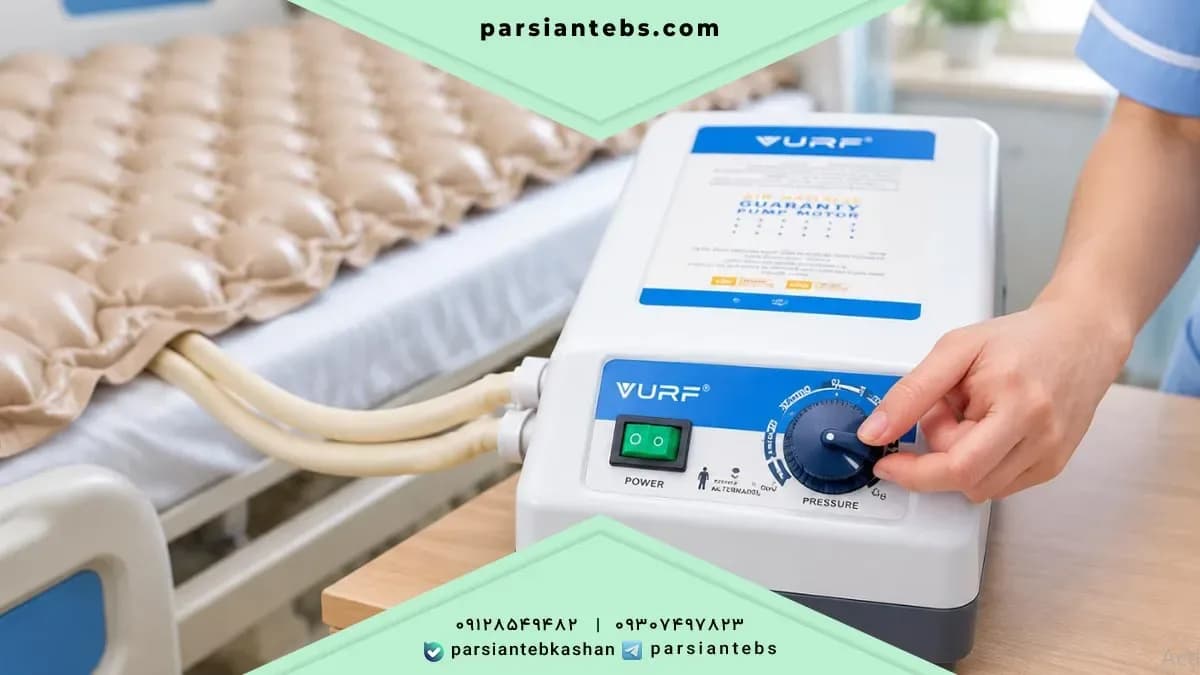
Hang the air pump on the footboard of the bed using the two hooks on the back of the unit; the pump should be placed where air can circulate.
Do not place the compressor on shaggy rugs or blankets, or cover it with fabric (the pump's air filter inlet must not be blocked).
Connect the silicone connecting hoses firmly to the pump outlets and mattress inlets. Make sure the hoses are not crushed or kinked under the bed legs.
3. Initial inflation (before transferring the patient)
Switch on the pump and set the adjustment dial to maximum.
Wait at least 20 to 30 minutes for all cells to fill and the full alternating cycle to form. Transferring the patient onto an empty mattress puts strain on the mattress structure and seams.
4. Precise air pressure adjustment and the “no bottoming out” test (Bottoming Out Test)
Set the pump's pressure level according to the guide chart and the patient's weight in kilograms.
The critical Bottoming Out test: once the patient is in position, slide your hand flat (palm horizontal) between the patient's buttocks and the dip of the deflated cell. Your hand should be able to move in this space with very little friction. If the patient's buttocks are pressing directly against the bed base, the pump setting is too low and should be increased; if there is no give and the mattress is rock-hard, the setting is too high and should be reduced.
5. Type of sheet and surface covering
On an alternating-pressure mattress, use only a single thin, stretchy, smooth cotton sheet.
Strictly avoid multiple layers of sheets, thick travel blankets, or stiff, wrinkled nylon underpads; extra layers inhibit the pressure-relief function.
What does an alternating-pressure mattress not replace? (Principles of comprehensive care)

According to the official standard of the guideline on the prevention and management of pressure ulcers from NICE (National Institute for Health and Care Excellence),an alternating-pressure mattress should be used as part of a coordinated care package:
┌─ 1. Regular repositioning (every 2 hours)
├─ 2. 24-hour skin monitoring (bony prominences)
Complementary care alongside the mattress ───┼─ 3. Managing skin moisture and preventing friction
├─ 4. Therapeutic nutrition and proper hydration
└─ 5. Separate heel protection (Heel Floating)
1. Regular repositioning of the patient: an alternating-pressure mattress does not replace turning the patient. In completely immobile patients, repositioning at a 30-degree angle (right side, back, left side) at least once every 2 hours is required.
2. Regular, careful skin monitoring: check all pressure areas daily in good light: the tailbone, pelvis, outer hip bone (trochanter), ankles, heels, shoulder blades, elbows and the back of the head.
Clinical tip for darker skin: on darker skin, redness may not be obvious, so watch for purple/bluish discoloration, unusual warmth, localized hardening of the skin (Induration), edema and swelling, or tenderness at the site with particular care.
3. Managing moisture, hygiene and friction: after each episode of incontinence, clean the skin with mild, alcohol-free lotions and cleansers and dry it thoroughly. Use protective ointments containing zinc oxide to create a barrier layer. When moving the patient up the bed, never drag their body across the sheet; skin stretching (Shear Force) tears the capillaries.
4. Nutrition and correcting dehydration: anemia, low blood albumin, dehydration and malnutrition severely weaken the skin's resistance.
5. Contact points of external equipment: urinary catheter tubes, nasal oxygen cannulas, monitoring wires or breathing masks must not get trapped under the patient's body; localized pressure from this equipment can also cause a pressure ulcer within a few hours.
Correct cleaning, hygiene and maintenance of the mattress and pump
Cleaning the surface: wipe the mattress cover with a damp cloth moistened with mild detergents or non-acidic hospital disinfectant solutions. Never immerse the mattress or pump in water, and let it dry completely before the patient uses it.
Pump filter: there is usually a small air filter pad on the back of the pump; remove it once a month and wash off the dust.
Preventing cuts and heat contact: keep electric heaters, hot water bottles and sharp objects away from the mattress.
Common mistakes and errors when using an alternating-pressure mattress
⛔ Turning off the pump at night: the pump of an alternating-pressure mattress is built for continuous, 24-hour operation. Cutting the power to reduce noise will deflate the cells and lead to a bedsore disaster overnight.
⛔Setting it by eye without checking the pressure: setting the pump to its firmest level makes the contact surface as hard as wood and stops blood flow.
⛔Placing the mattress on worn-out spring mattresses: if the bed's base mattress is sagging or has broken springs, the alternating-pressure mattress will warp and lose its effectiveness.
⛔ Neglecting the condition of the cover: continued use of a torn mattress leads to seepage of secretions, urinary infections and air leaks from the cells.
When is an urgent specialist clinical assessment needed?
If you notice any of the following warning signs, immediately relieve pressure on the affected area and seek help from a physician or wound specialist:
Skin blisters (containing clear fluid, blood-tinged fluid or pus)
An open wound, visible subcutaneous fat, or darkening and blackening of the skin (necrotic eschar tissue)
Persistent redness or darkening that does not fade even half an hour after the weight is removed
Foul-smelling discharge, fever and chills, or a sudden increase in pain at the contact area
What should you consider when buying an alternating-pressure mattress? (A buying guide from Parsian Teb)
Relying only on the name “anti-bedsore mattress” cannot guarantee your patient's health. To choose an effective model, the following factors should be carefully analyzed:
1. Patient weight and build: the patient's actual weight should match the mattress's maximum weight capacity exactly (egg-crate models for under 85 kilograms and tubular models for higher weights).
2. Expected length of bed rest: is the illness temporary, or will the patient be in bed for months?
3. Skin condition and ulcer risk level: an initial skin examination by a nurse to determine whether cellular or advanced models are needed.
4. Mattress dimensions and compatibility with the hospital bed: the mattress must fit the width and length of the bed exactly.
5. Material (medical-grade PVC or nylon polyurethane): high-quality materials prevent skin sensitivities and increase the mattress's durability under pressure.
6. Warranty, after-sales service and spare parts supply: alternating-pressure mattresses depend on their pumps; buying from unreliable sources without spare parts (such as a spare motor, replacement tubes or an original cover) puts the patient's life at risk when a technical fault occurs.

Final summary on alternating-pressure mattresses
An alternating-pressure mattress is a vital and smart investment for restoring comfort, preventing the staggering costs of treating bedsores, and preserving the dignity and health of patients with limited mobility. This equipment delivers the best results alongside a structured care plan that includes regular repositioning, attention to nutrition, ongoing hygiene and skin monitoring.
If you need advice on choosing and buying a standard egg-crate, cellular or orthopedic alternating-pressure mattress, the experienced specialists and experts at the Parsian Teb medical equipment store are ready to help you assess the patient's clinical situation and provide the best products with a valid warranty.
Ways to contact Parsian Teb medical equipment:
📞 Phone number and specialist advice: 031-55462652
🌐 Online orders: through the website of the Parsian Teb medical equipment store and itsContact Uspage.
Frequently asked questions about alternating-pressure mattresses
1. Does an alternating-pressure mattress treat or reduce back pain?
Yes; standard alternating-pressure models and ergonomic foam surfaces play a significant role in relieving muscle pain and improving the quality of night-time rest by properly supporting the curve of the spine, reducing pressure points on the muscles around the vertebrae and aiding blood circulation.
2. What is the main difference between an alternating-pressure mattress and an ordinary hospital mattress?
Ordinary hospital mattresses are simply a static sponge or foam surface that does not shift weight, whereas an alternating-pressure mattress is an active mechanical system that continuously changes the pressure on bony points throughout the day and night to prevent bedsores from forming.
3. What number should the air pressure of an alternating-pressure mattress be set to?
There is no fixed number for everyone. The setting should be based on the patient's weight, height and comfort, using the compressor's adjustment knob. The precise clinical criterion is the “no bottoming out” test (placing a hand under the patient's buttocks at a deflated cell).
4. What is the difference between a cellular and an egg-crate alternating-pressure mattress?
An egg-crate mattress has a continuous structure resembling an egg carton and is used for lighter weights and short-term bed rest (general prevention). A cellular mattress is made of separate tubes with powerful airflow, has a high weight capacity, each of its tubes is replaceable, and it is used for long-term bed rest and high-risk patients.
5. Isn't it dangerous to leave the pump of an alternating-pressure mattress on all the time, and doesn't it use a lot of electricity?
No; alternating-pressure mattress compressors are designed to run 24 hours a day, 365 days a year. Their power consumption is very low (equivalent to a small energy-saving bulb, about 7 to 10 watts), and switching the pump off endangers the patient's life because of the risk of bedsores.
Reliable sources and review date
(Last content review date: autumn 1405 - based on the official pressure ulcer prevention and management guidelines of England's National Institute for Health and Care Excellence NICE)