
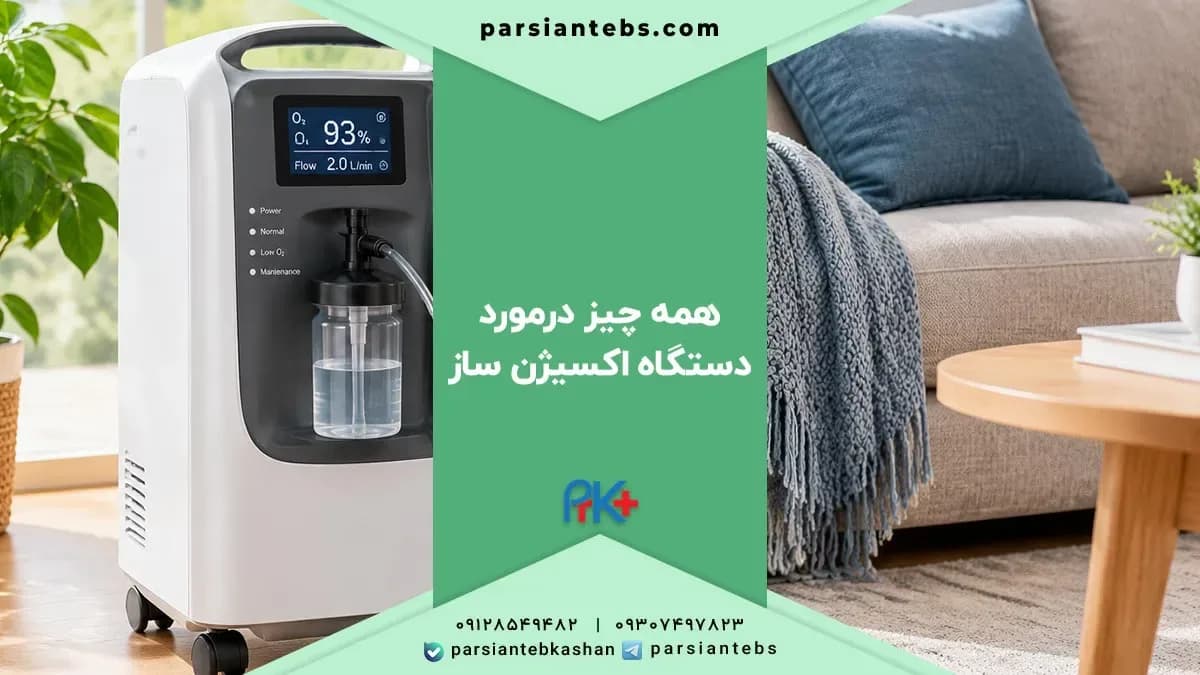
What Is an Oxygen Concentrator? How It Works, Maintenance and Safe Use
An oxygen concentrator draws in room air, removes most of the nitrogen and delivers oxygen-enriched air to the patient at a set flow. Unlike a cylinder, it has no limited oxygen supply, but it depends on electricity, free airflow and regular servicing. It is only safe to use once a physician has set the flow rate and duration of use. Read on in this article from the Parsian Teb Kashan online store to learn more.
Buying online and using oxygen without an assessment can be dangerous. A higher flow rate is not always better and in some patients may lead to a rise in carbon dioxide or to oxygen-related injury.
How does an oxygen concentrator work?
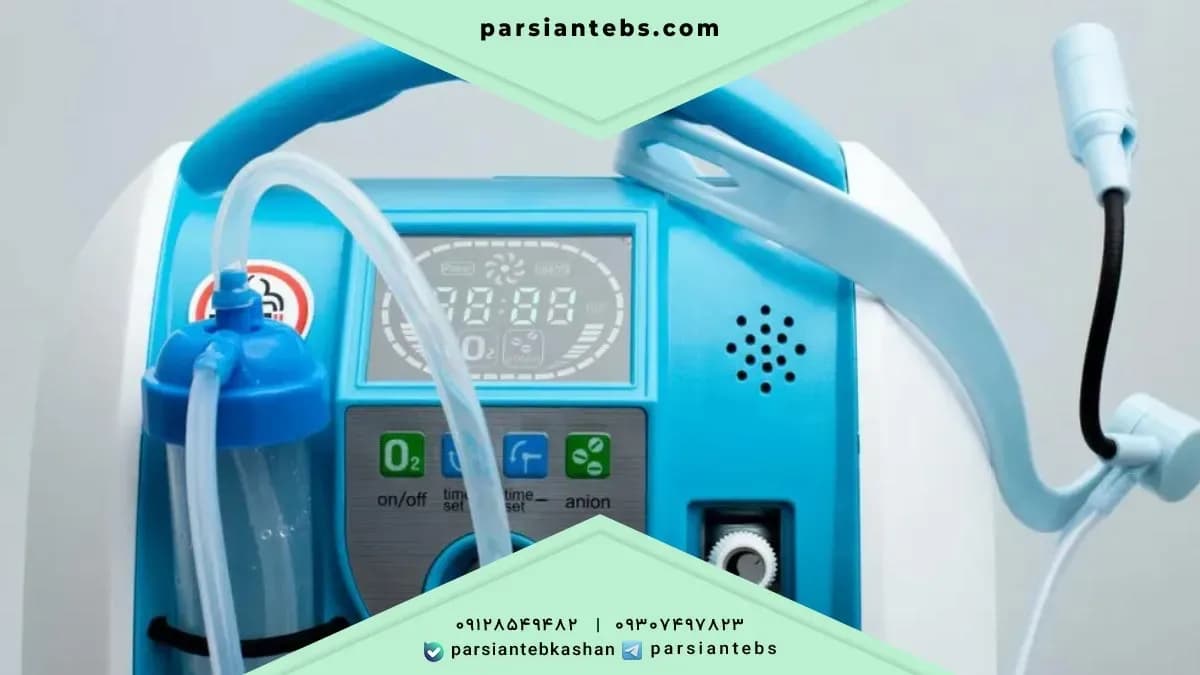
A compressor passes air through a filter, and zeolite columns absorb the nitrogen. The device switches between the columns to produce a continuous output. A flowmeter sets the flow rate in liters per minute, and some models have a purity sensor, an hour meter and pressure or power alarms. Purity and maximum flow must be checked together; the capacity figure alone is not enough.
Stationary and portable models
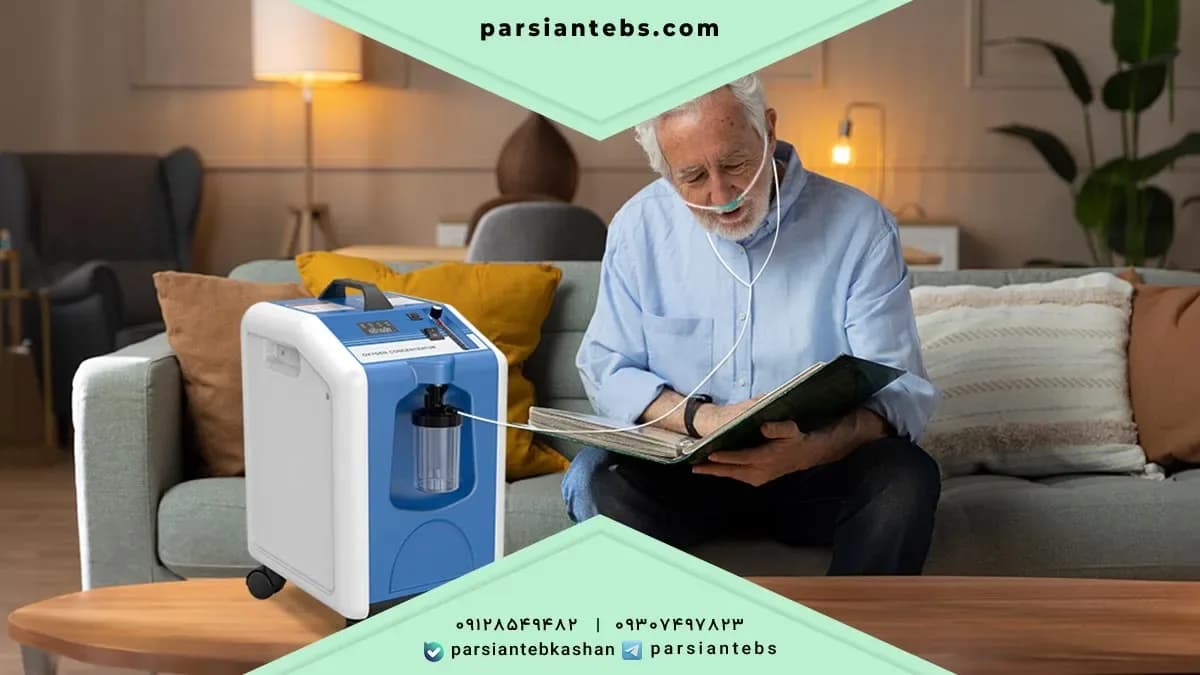
Stationary oxygen concentrator
Designed for long-term use at home, it usually provides higher continuous flow and runs on mains electricity. Weight and noise, power consumption, access to servicing and a plan for power outages are important when choosing one.
Portable oxygen concentrator
It is lighter and battery-powered, and some models deliver oxygen in pulses only during inhalation. A pulse setting number is not necessarily equivalent to the same liters per minute of continuous flow. The device's ability to maintain the target oxygen level while walking and sleeping must be assessed.
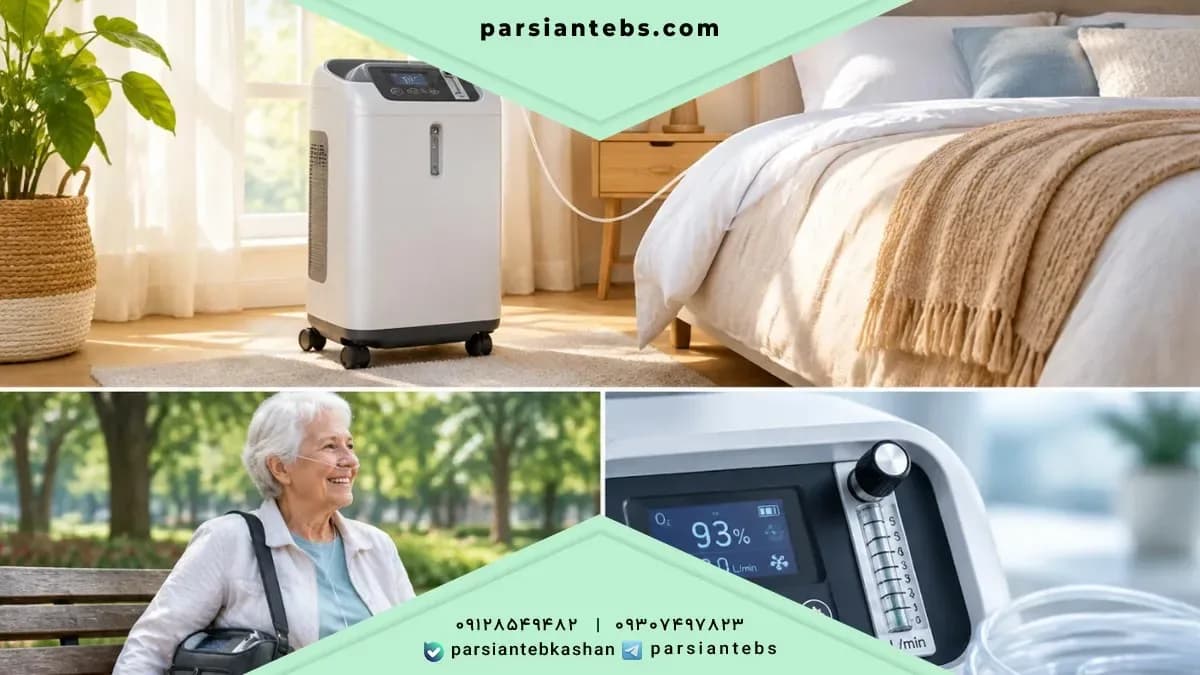
What capacity in liters is right?
The physician's prescription specifies the flow rate needed at rest, during activity and during sleep. The device must maintain its stated purity at that flow rate and have some performance reserve. Choosing a five- or ten-liter model based only on the label on the housing is not correct; the purity chart at different flows, the type of flow and the possibility of increased needs in the future must be reviewed.
Daily setup
Place the device upright on a stable surface with enough distance from walls and curtains so that the air inlet is not blocked.
Check the filter, tubing, cannula and, if prescribed, the humidifier according to the manual.
Turn the device on and allow the recommended warm-up time.
Set the flowmeter exactly to the prescribed flow rate and read the float from the correct angle.
Make sure the tubing is not kinked and that oxygen is flowing, and do not ignore alarms.
After use, switch off and store the device and accessories as instructed.
Humidifier and cannula
A humidifier is not necessary for everyone. If one is prescribed, use only the recommended water and a clean container, and do not fill it above the maximum line. Water entering the tubing, a contaminated container or late replacement of the cannula increases the risk of contamination and blockage. For nasal dryness, do not use oil-based products or petroleum jelly near oxygen; agree on a water-based option with your physician or pharmacist.
Cleaning and servicing an oxygen concentrator
After unplugging, wipe the housing with a slightly damp cloth and never pour any liquid into the device.
Clean the washable filter at the recommended interval and dry it completely; do not install a wet filter.
Replace or clean the cannula, mask, tubing and bottle according to the manufacturer's and supplier's schedule.
Record operating hours, any new noise, unusual heat and purity alarms.
Leave internal servicing and replacement of the zeolite or compressor to an authorized service center.
Fire and electrical safety
Ventilate the room and keep cigarettes, vapes, candles, flames and sparks away.
According to NHS guidance, keep the device away from open flames and heat sources, and follow your supplier's local advice.
Do not use unsuitable power strips or damaged cords, and do not cover the device.
Do not use oil-based products, flammable sprays or solvents during oxygen therapy.
Have a working smoke detector and an emergency exit plan.
Plan for power outages and breakdowns
If the patient depends on continuous oxygen, an adequate backup source, the supplier's phone number and a transfer plan must be ready before a crisis. Calculate battery or cylinder duration using the actual flow rate. Do not just silence an alarm for power loss, low purity or low pressure; check the patient and the oxygen pathway, and switch to the backup source as instructed.
Oxygen concentrator buying guide
Continuous or pulse flow type and compatibility with the prescription
Maintaining purity at the required flow rate
Actual maximum flow and outlet pressure
Noise, power consumption, weight and wheels
Battery and charging options on portable models
Power, purity, pressure and temperature alarms
Availability of filters, parts and servicing

When is medical help needed?
Bluish skin, worsening shortness of breath, confusion, drowsiness, a new headache, chest pain or oxygen levels staying below the person's target require contacting the care team or emergency services. First make sure the device is on and the tubing is open, but do not delay emergency treatment to repair the device.
Frequently asked questions
Is an oxygen concentrator the same as an air purifier?
No. An oxygen concentrator produces enriched output for the patient; an air purifier only reduces particles or pollutants in the air.
Does a 10-liter model provide purer oxygen?
Not necessarily. Greater capacity relates to maximum flow. Actual purity must be checked at the flow rate in use.
Should the device be switched off at night?
If oxygen has been prescribed during sleep, switching it off on your own is not right. The physician determines the usage schedule, and the device must be suitable for the required duration.
Summary
An oxygen concentrator is a suitable source for long-term oxygen therapy, provided there is a correct prescription, appropriate capacity, ventilation and regular servicing. Before buying, check continuous or pulse flow, purity at the prescribed flow rate, alarms and a backup power plan, and never change any setting on your own.
Reliable sources and review date
This article was reviewed using the sources below. Last content review: 23 Mordad 1405.