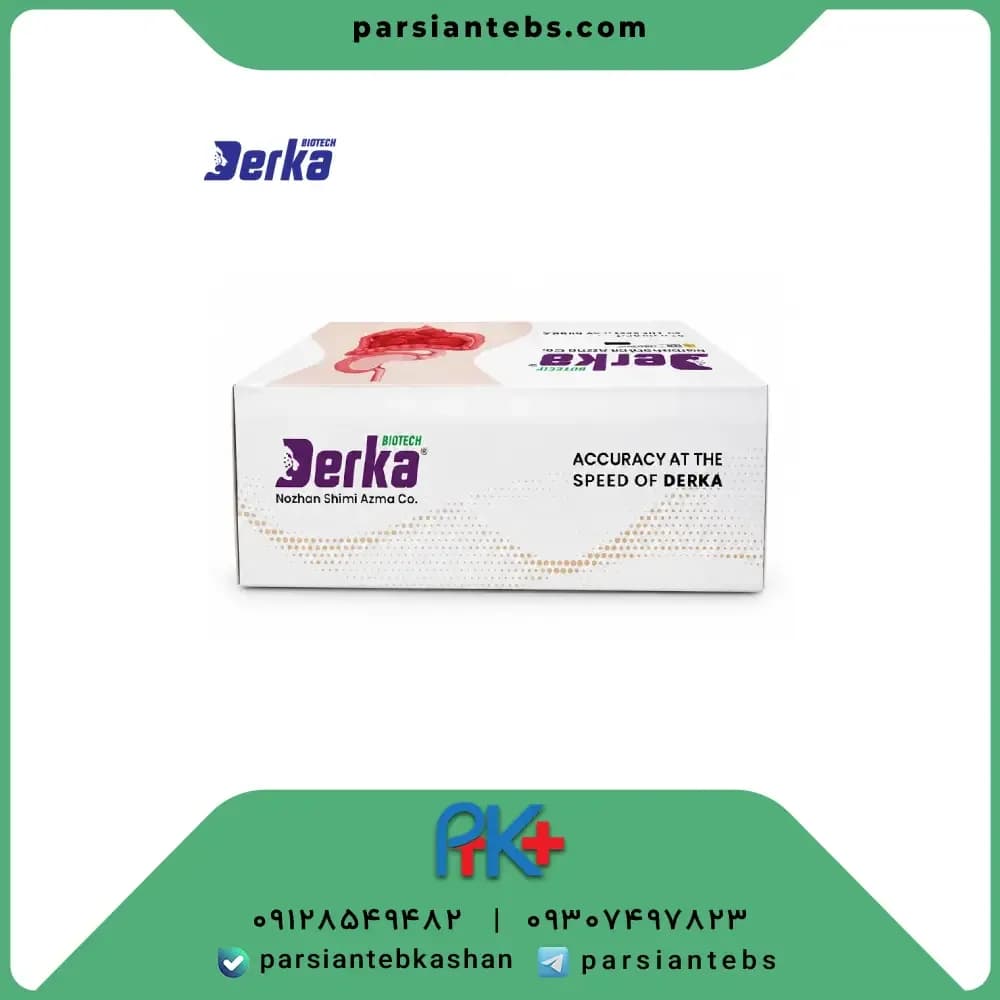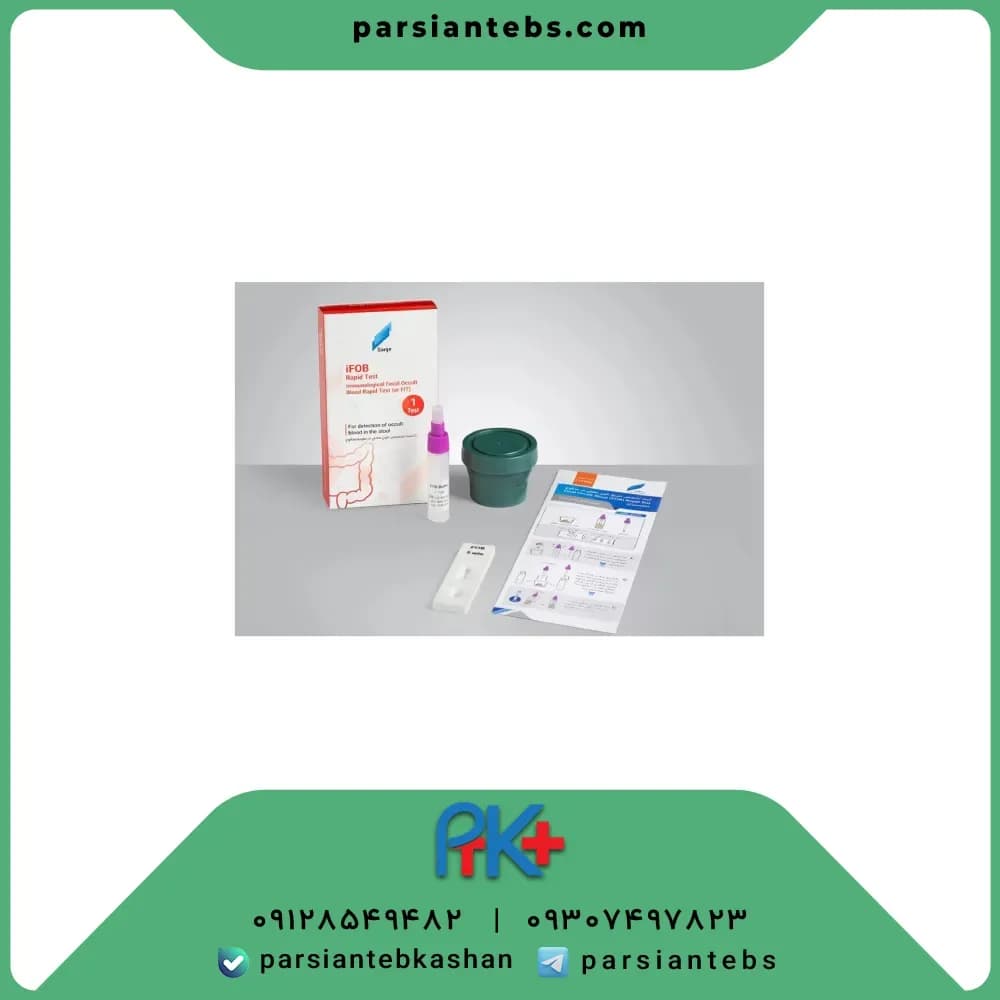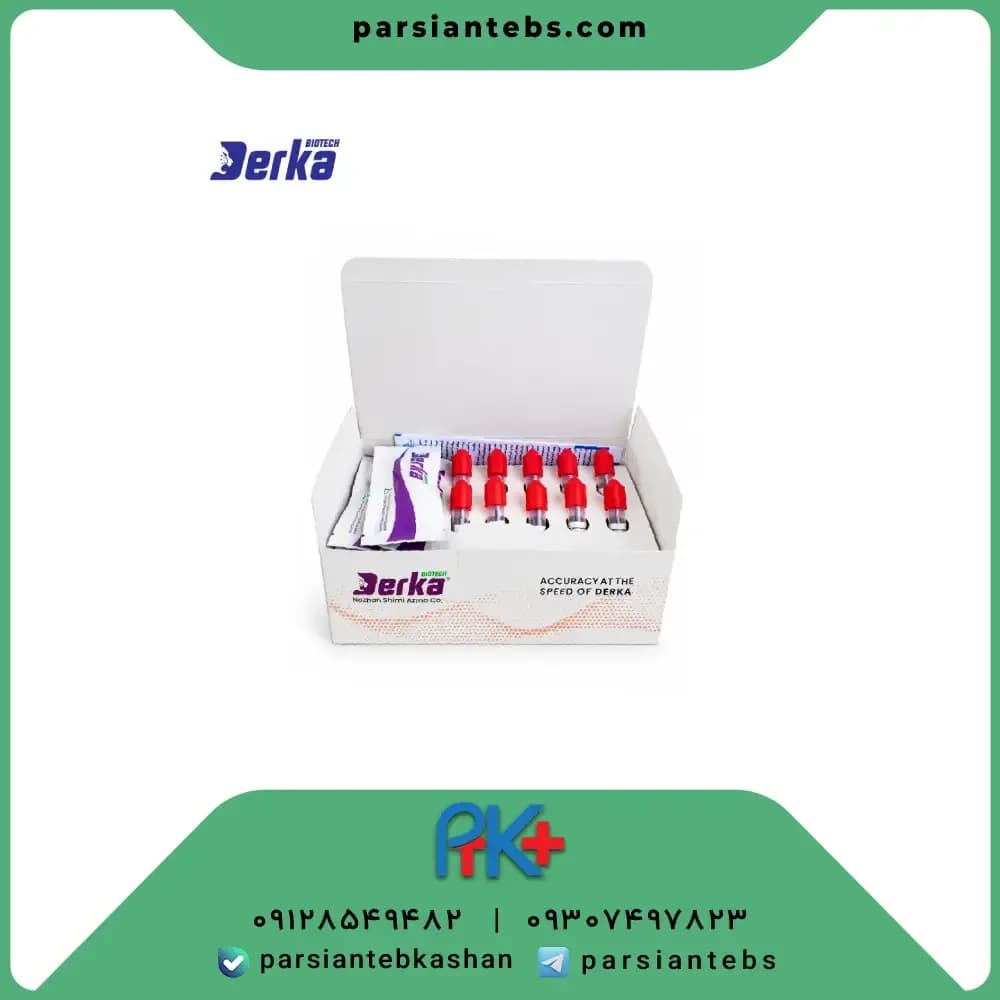
Derka H. pylori Kit
This product is sold only as pack
Each pack contains 20 unit
Price perpack: 978,000 toman
1 pack, 20 unit total
Need assistance?
Product description
What Is an H. pylori Kit?
The H. pylori kit (H. pylori Test Kit) is one of the most widely used products in laboratory diagnostics and is used to investigate infection caused by the bacterium Helicobacter pylori. This bacterium can live in the stomach and, in some people, cause gastritis, gastric ulcers, or duodenal ulcers. Identifying a Helicobacter pylori infection helps the physician choose appropriate treatment when needed and plan the patient's follow-up.
If you are responsible for purchasing laboratory equipment and supplies, or are looking to buy an H. pylori kit for your healthcare facility, it is best to check the required sample type, the detection method, the kit's sensitivity and specificity, and its storage conditions before ordering. Choosing the right product helps ensure the test is performed correctly and laboratory costs are better managed.
An important point is that not all H. pylori kits work the same way. Some are designed to detect antibodies in blood, while others detect bacterial antigen in a stool sample. This difference matters greatly when choosing a product, especially if the goal is to check for active infection or to assess the outcome of treatment.
At Parsian Teb Kashan, you can request a price quote and get information about the H. pylori kit, and choose the product you need based on the intended use and the capabilities of your diagnostic center.
Features and Benefits of the H. pylori Kit
The exact features of this product depend on its brand and model; however, the following are among the most important points to consider when evaluating and purchasing a Helicobacter pylori diagnostic kit.
1. Helps Identify Helicobacter pylori Infection
The main purpose of the H. pylori kit is to make it possible to check for evidence of Helicobacter pylori infection. This bacterium is associated with certain stomach conditions, including chronic gastritis and peptic ulcers. The test result, together with the patient's symptoms and the physician's evaluation, can support diagnostic decision-making.
2. A Variety of Detection Methods
H. pylori kits are designed around different technologies. Some kits use the immunochromatographic method, while others are made to work with specific laboratory equipment. When purchasing, you should match the test method to the capabilities and needs of your center.
3. Antigen or Antibody Testing
One of the key differences between H. pylori kits is the type of marker being tested.
Stool antigen kit: Designed to detect bacteria-related antigens in a stool sample; when a validated method is used, it can be applied to check for active infection and to assess eradication of the infection.
Blood antibody kit: Tests for antibodies produced against the bacterium. A positive result on this test does not necessarily mean active infection, because antibodies may persist even after the infection has cleared.
Therefore, the kit should be chosen based on the purpose of the test and the type of assessment required.
4. Use in Medical Diagnostic Laboratories
Depending on their design, some H. pylori kits are suitable for testing in medical diagnostic laboratories. When purchasing, pay attention to the instructions for use, required accessory equipment, sample preparation method, and quality control requirements.
5. Choose a Product That Matches Your Usage Volume
Diagnostic kits may be supplied in different pack sizes. Reviewing the number of tests per pack and daily usage helps the laboratory manage its inventory better and avoid over-ordering or running short of product.
6. The Importance of Diagnostic Sensitivity and Specificity
Diagnostic sensitivity and specificity are key criteria for comparing laboratory kits. Sensitivity shows how well the test identifies positive cases, while diagnostic specificity reflects its ability to correctly identify negative cases.
The values of these indicators must be taken from the official documentation of the specific brand and model; therefore, no single figure can be stated for all H. pylori kits.
7. Storage Conditions Must Be Observed
Storage conditions can affect the performance of diagnostic kits. The permitted storage temperature, transport conditions, expiry date, and in-use period after opening the pack must follow the manufacturer's leaflet.
8. The Importance of Quality Control in the Laboratory
To ensure the test performs correctly, following the manufacturer's instructions and quality control requirements is essential. For rapid kits, the appearance of the control line or other internal control indicators must be checked according to that product's instructions. A result that does not meet the test's validity criteria must not be reported as a valid result.
H. pylori Kit Technical Specifications
The table below shows the general specifications of the product. Exact details such as turnaround time, number of tests, and storage conditions should be completed based on the brand and model supplied.
Specification | Details |
|---|---|
Product name | H. pylori Kit |
English name | H. pylori Test Kit |
Target organism | Helicobacter pylori |
Application | Aid in diagnosing infection associated with Helicobacter pylori |
Marker type | Antigen or antibody, depending on the model |
Sample type | Whole blood, serum, plasma, or stool, according to the product instructions |
Test method | Depends on the kit's brand and technology |
Result type | Qualitative or quantitative, depending on the model |
Packaging type | Depends on the product supplied |
Tests per pack | To be checked against the manufacturer's specifications |
Turnaround time | Depends on the model and test procedure |
Diagnostic sensitivity | According to the manufacturer's official documentation |
Diagnostic specificity | According to the manufacturer's official documentation |
Accessory equipment | According to the pack contents and product instructions |
Storage conditions | According to the manufacturer's label and leaflet |
Expiry date | As stated on the product packaging |
Brand and country of manufacture | To be confirmed based on the product supplied |
Note: This table is a general introduction to the product. Before publishing definitive technical specifications, the label, leaflet, or official information for the specific model must be checked.
Why Buy the Right H. pylori Kit from Parsian Teb Kashan?
When purchasing diagnostic supplies, choosing a product on price alone can lead to a mismatch with the laboratory's needs. The detection method, sample type, reliability of the technical specifications, expiry date, and cost per test are among the factors that should be reviewed before placing an order.
Focused on supplying medical and laboratory equipment and supplies, Parsian Teb Kashan enables diagnostic centers to inquire about and follow up on the products they need. To choose the most suitable H. pylori kit, it is best to specify the following information when making an inquiry:
Preferred brand or model, if known.
Required test type: antigen or antibody.
Sample type used in your laboratory.
Number of packs required.
A request for technical specifications, expiry date, and storage conditions.
With these details specified, comparing products becomes easier and the chance of ordering a kit that does not match your center's needs is reduced.
H. pylori Antigen vs. Antibody Kits
Stool antigen kits and blood antibody kits are both used for testing related to Helicobacter pylori, but their results do not mean the same thing.
By detecting bacterial antigen, the stool antigen kit can be used to check for active infection. Some stool antigen tests are also suitable for checking treatment success; however, testing must be done at the right time and in accordance with medical instructions.
In contrast, a blood antibody test shows that the body has been exposed to the bacterium's antigens and has mounted an immune response. Because antibodies may remain long after treatment, this test is usually not a suitable option for confirming eradication of the infection.
Consequently, when buying an H. pylori kit, first determine whether the goal is to check for possible active infection, to check for past exposure, or to follow up on treatment. Then choose a product that has been validated for that specific use.
Key Points Before Buying an H. pylori Kit
To choose the right product, review the following:
Test type: Determine whether the product detects antigen or antibody.
Sample type: The required sample must be compatible with your center's capabilities and workflow.
Procedure: Review the test steps and accessory equipment in the leaflet.
Sensitivity and specificity: Obtain the performance specifications from the manufacturer's reliable documentation.
Expiry date: The product should have sufficient shelf life for your center's usage volume.
Storage conditions: Observe the permitted temperature and transport requirements.
Quality control: Carry out quality control procedures in accordance with your laboratory's requirements.
It should also be noted that some medications, particularly proton pump inhibitors, antibiotics, and bismuth compounds, may affect the results of certain tests for active infection. When to stop or change a medication must be decided only by a physician and must never be done on one's own.
Frequently Asked Questions About the H. pylori Kit
1. What is the H. pylori kit used for?
This kit is used to investigate infection caused by the bacterium Helicobacter pylori. Its exact application depends on whether the kit detects antigen or antibody.
2. What is the difference between H. pylori antigen and antibody kits?
A stool antigen kit can be used to check for active infection, whereas a blood antibody test may remain positive even after the infection has cleared. The choice of method should match the purpose of the test.
3. Does a positive H. pylori kit result mean a stomach ulcer?
No. A positive result indicates evidence of infection or of an immune response related to the bacterium, not a definitive diagnosis of a stomach ulcer. A final diagnosis requires evaluation by a physician and, if necessary, further investigations.
4. Can the H. pylori kit be used to check treatment success?
Some methods, including a validated stool antigen test, are used to check eradication of the infection. Testing should be done at an appropriate time after treatment is completed. A blood antibody test is usually not suitable for confirming eradication.
5. What should be checked when buying an H. pylori kit?
Sample type, test method, diagnostic sensitivity and specificity, number of tests per pack, expiry date, storage conditions, and the reliability of the manufacturer's specifications are the most important factors.
Buy the H. pylori Kit from Parsian Teb Kashan
If you are looking to buy an H. pylori kit for your medical diagnostic laboratory or healthcare facility, choosing a product suited to the purpose of the test and the capabilities of your center is very important.
To request a price quote, get technical information, and check ordering terms, visit the Parsian Teb Kashan website or contact the sales department.
Parsian Teb Kashan: your partner in supplying medical and laboratory equipment and supplies.
Technical specifications
| Condition | New |
|---|---|
| Parent category | Laboratory equipment |
| Category | Laboratory kits |
| Weight | 5 g |
| Stock availability | Available |
Related products