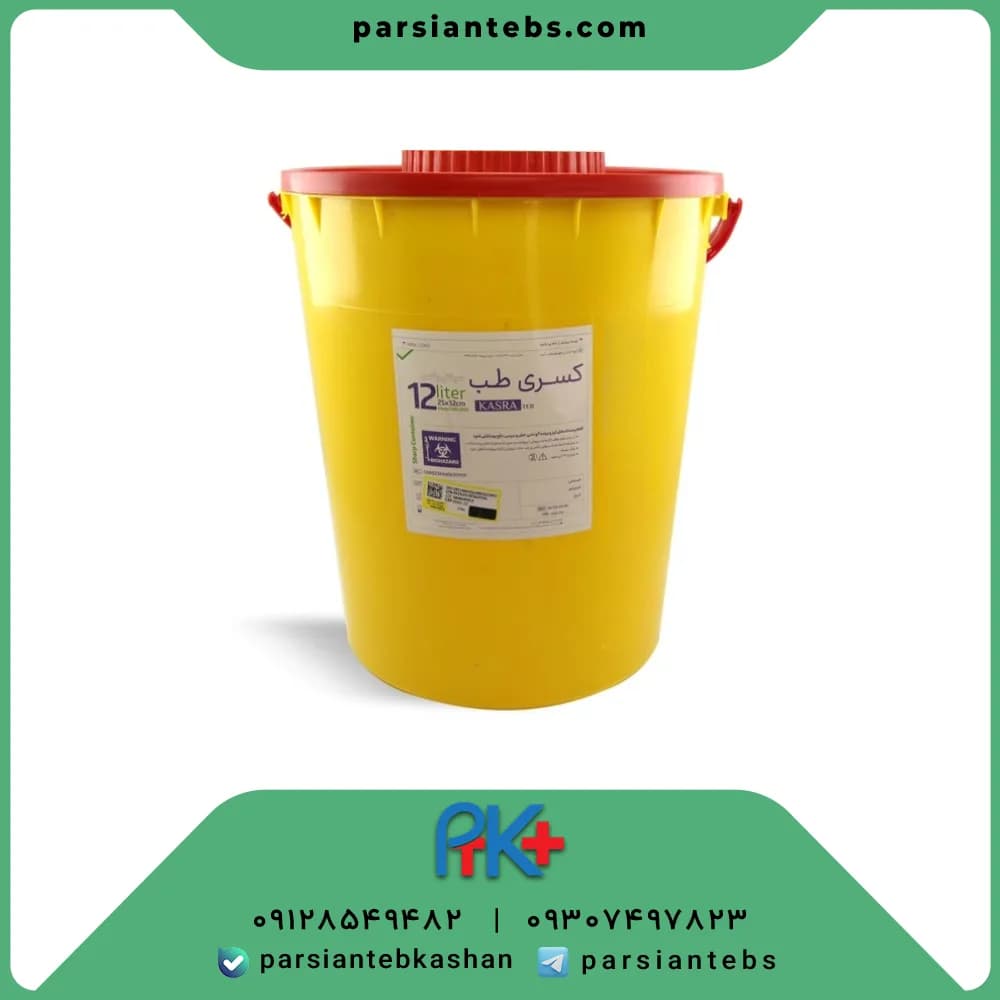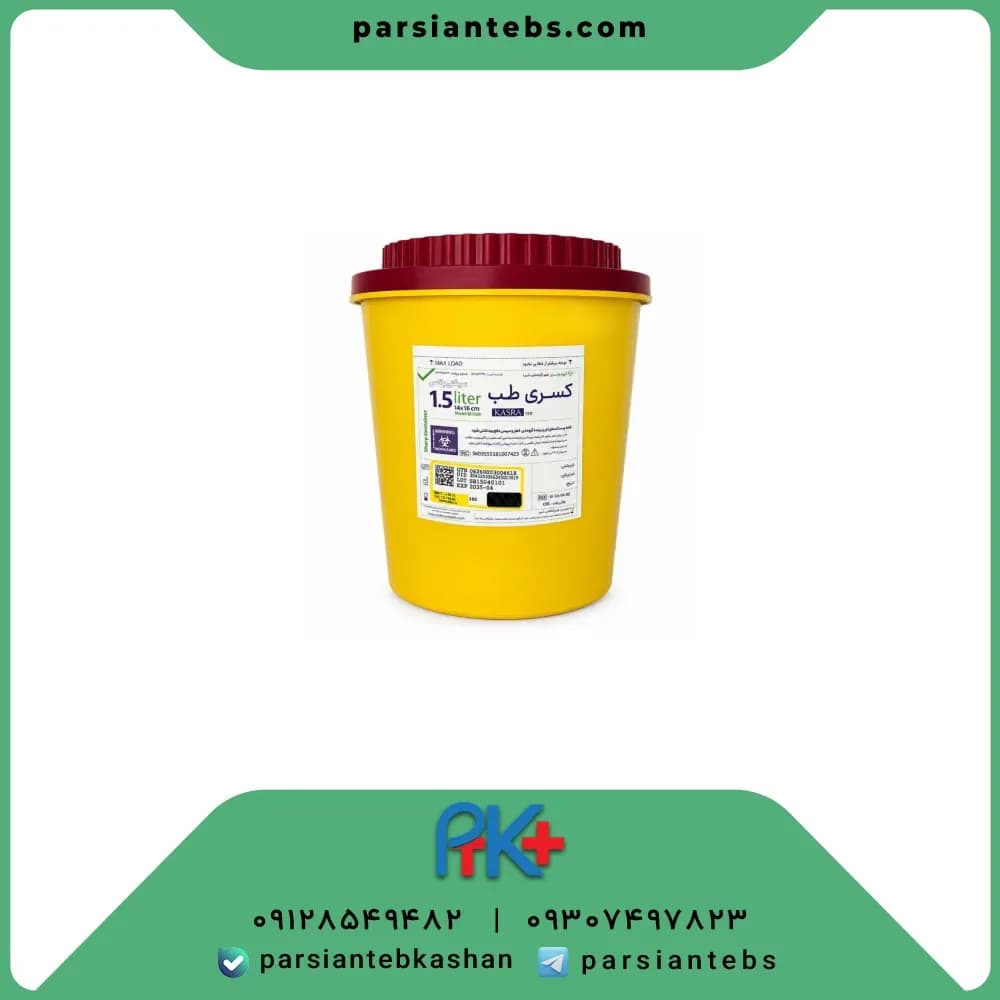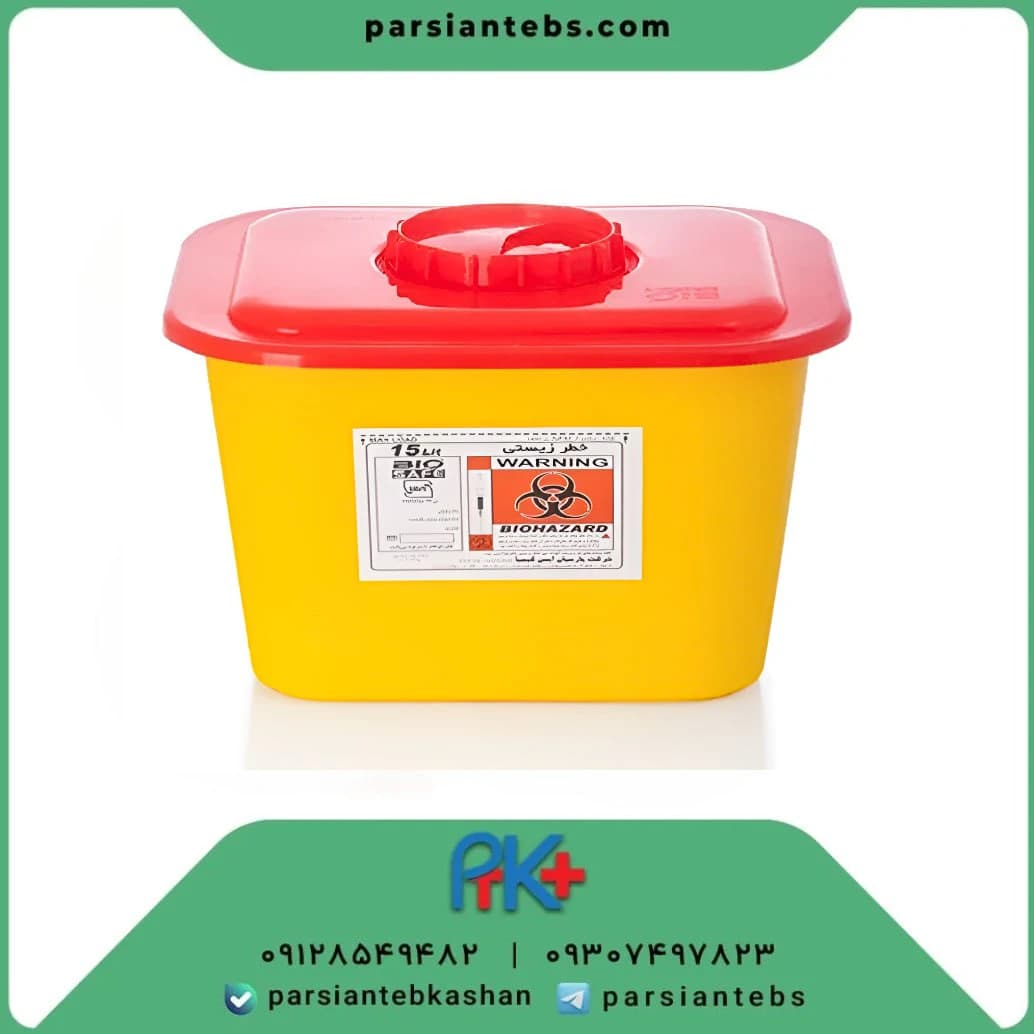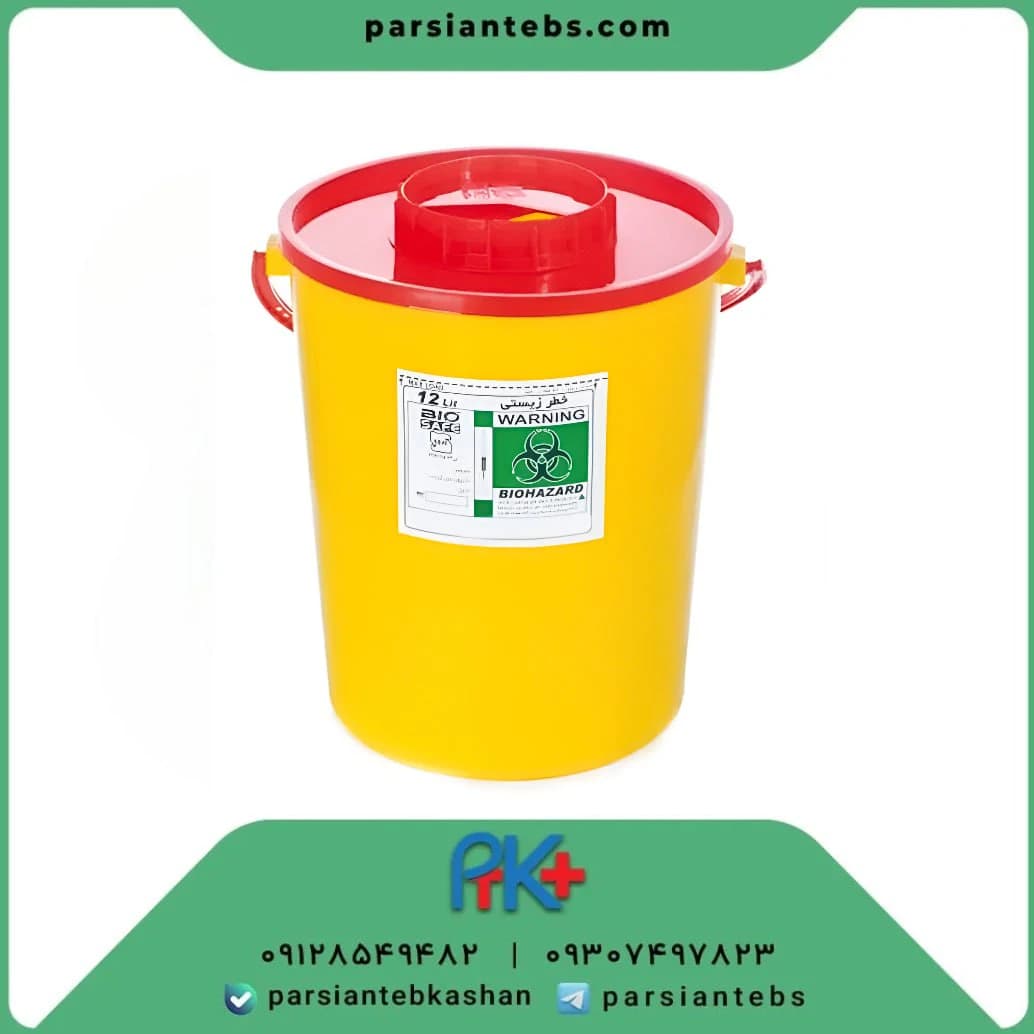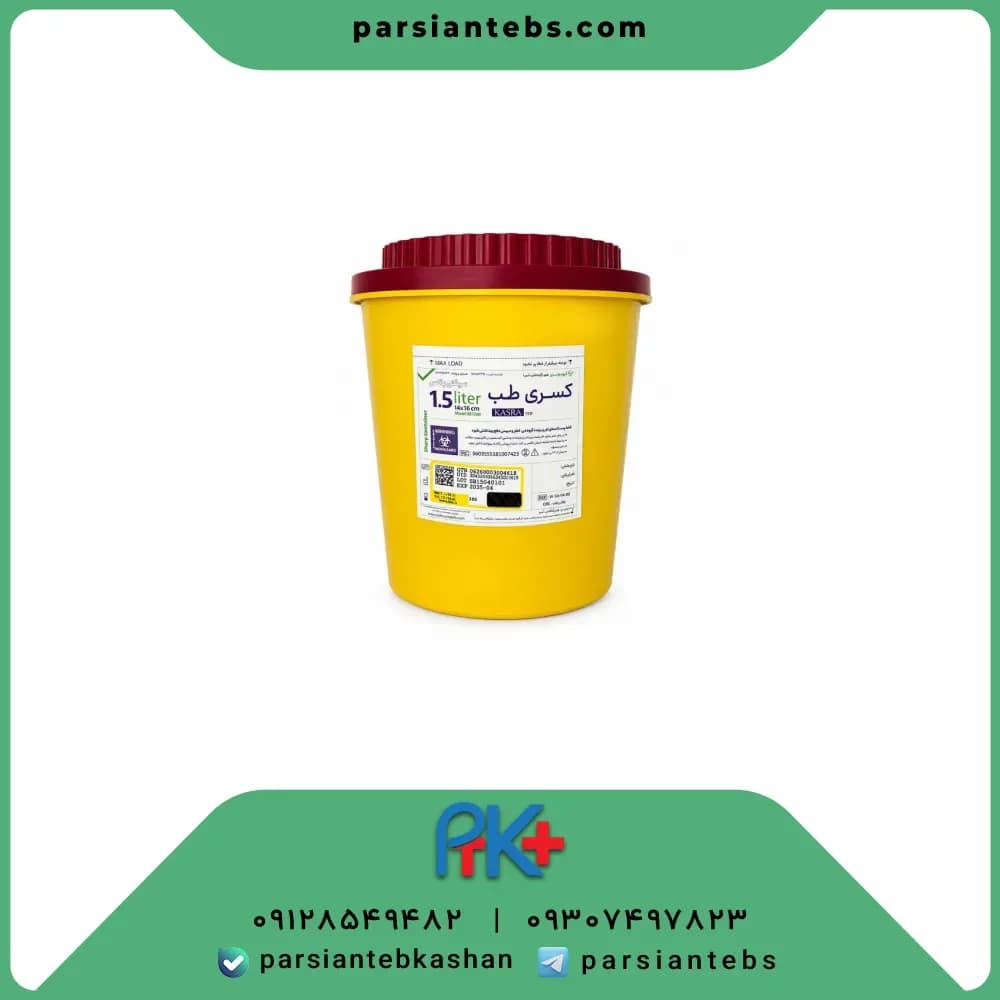
Kasra Teb 2-liter safety box
This product is sold only as carton
Each carton contains 120 unit
Price percarton: 12,600,000 toman
1 carton, 120 unit total
Need assistance?
Product description
Introducing the Kasra Teb 2-liter safety box
If you work in a doctor's office, outpatient clinic, laboratory, clinic, or injection center, safe collection of sharp items is one of the most important points in your workplace. Kasra Teb's 2-liter safety box is designed for exactly this purpose, so that needles, syringes, and other sharp medical equipment are placed neatly inside a special container after use.
The 2-liter capacity of this model makes it a good option for settings that produce a low to moderate amount of sharps waste and need a compact, practical container. Using a suitable safety box can help reduce staff's direct contact with sharps waste and keep the workplace more organized.
If you are looking for a 2-liter safety box for everyday use in medical and clinical settings, the Kasra Teb model can be a practical choice for managing sharps waste.
Note: This product is sold in packs of 120 units.
What is a safety box and what is it used for?
A safety box, or sharps waste collection container, is one of the important pieces of equipment in medical settings. This container is used to hold items such as needles, syringes, lancets, intravenous cannulas, and other sharp equipment.
The main purpose of using a safety box is to place used sharp items directly into a suitable container and prevent them from being discarded in ordinary bins.
Kasra Teb's 2-liter safety box is suitable, thanks to its relatively compact capacity, for places that need a smaller, manageable container for collecting sharps waste.
Features and benefits of the Kasra Teb 2-liter safety box
1. Compact 2-liter capacity
One of the important features of this product is its 2-liter capacity. This capacity means the safety box does not take up much space and is a good option for settings with a limited volume of sharps waste.
2. Suitable for collecting sharp medical items
The Kasra Teb 2-liter safety box is used to collect medical sharps waste. Items such as needles, syringes, lancets, and similar equipment can be collected in this type of container.
3. Helps reduce contact with sharps waste
One of the most important reasons for using a safety box is to reduce the likelihood of people coming into direct contact with used sharp items. Placing these items in a special container helps manage waste more safely.
4. Suitable for use in clinical settings
This product is used in settings such as doctors' offices, outpatient clinics, laboratories, clinics, injection centers, and other settings related to medical services.
5. Helps keep the workplace more organized
When sharps waste has a designated collection point, the workplace is tidier and waste management is simpler. Using a suitable safety box is part of this organization.
6. Dimensions and capacity suited to limited use
The 2-liter model is suitable when a very large container is not necessary. This can be practical for treatment rooms, work tables, or settings with limited production of sharps waste.
7. Suitable for managing sharps waste
As a piece of medical waste management equipment, a safety box allows sharp items to be collected in one place and can help the waste disposal process run better.
Who is the Kasra Teb 2-liter safety box suitable for?
This product can be used by a wide range of medical facilities and users, including:
Doctors' offices
Outpatient clinics
Medical clinics
Laboratories
Injection centers
Vaccination centers
Dental clinics
Nursing service providers
Treatment and care centers
Educational and laboratory settings related to medical sciences
If your workplace does not produce much sharps waste and you are looking for a compact container, Kasra Teb's 2-liter safety box can be a good choice.
What items can be placed in a safety box?
The main use of this product is collecting sharp medical items after use. Depending on the facility's activities, items such as the following can be collected in such a container:
Medical needles
Used syringes
Lancets
Intravenous cannulas and similar sharp components
Blades and other similar sharp medical items, in line with the facility's waste disposal guidelines
The important point is that the use and final disposal of the safety box must follow medical waste management guidelines and the facility's procedures.
Why choose the Kasra Teb 2-liter safety box?
When choosing a safety box, price should not be the only deciding factor. The right capacity, the product's purpose, the available space, and the amount of waste produced also matter a great deal.
The Kasra Teb 2-liter model is designed for users who need a smaller container. Compared with bulkier models, it takes up less space and can be a more sensible choice for facilities with more limited daily use.
On the other hand, if you produce a lot of sharps waste, it is better to look at higher-capacity models before buying, so the container needs emptying and replacing less often.
So the main advantages of the 2-liter safety box are its compact capacity, clear purpose, and suitability for limited to moderate consumption all in one product.
Differences between the 2-liter safety box and larger models
The capacity of a safety box should be chosen based on consumption.
The 2-liter model is suitable for settings with a more limited volume of sharps waste. In contrast, larger models are a better option for facilities that use more needles, syringes, and sharp equipment every day.
So a bigger safety box is not always a better one. A capacity matched to consumption makes the product more practical and easier to manage.
Important tips when buying a safety box
Before buying a safety box, it is a good idea to consider a few points:
Determine the capacity your facility needs.
Consider your daily consumption of sharp items.
Decide where the safety box will be placed.
Do not put unrelated waste in the container.
Follow your facility's guidelines for use and waste disposal.
Check the product's visual condition before use.
Once it reaches the permitted fill level, collect and dispose of it according to the facility's guidelines.
How to use the 2-liter safety box correctly
To make the best use of Kasra Teb's 2-liter safety box, place it in a suitable location within reach of staff. Used sharp items should be placed in the container immediately after use according to the established procedure, without being left on work surfaces.
Do not compress, press down, or handle the waste inside the container. Also, never put your hand inside the safety box to remove sharp items.
Once the container reaches the appropriate fill level, it should be sealed, transported, and disposed of according to medical waste management guidelines.
Technical specifications of the Kasra Teb 2-liter safety box
Product name: Kasra Teb 2-liter safety box
English name: Kasra Teb 2L Safety Box
Brand: Kasra Teb
Product type: Medical sharps waste collection container
Capacity: 2 liters
Body material: Plastic
Main use: Collecting and holding medical sharps waste
Used for: Needles, syringes, lancets, intravenous cannulas, and similar sharp instruments
Lid type: Equipped with a dedicated waste container lid
Closing system: Not specified in the product information
Color: Not specified in the product information
Sterility: Not specified in the product information
Assembly: Depends on the product design
Type of use: Suitable for managing medical sharps waste
Field of use: Medical, clinical, and laboratory
Place of use: Doctors' offices, outpatient clinics, hospitals, clinics, laboratories, and injection centers
Quantity per pack: Depends on the packaging type and product availability
Storage conditions: Store in a dry, clean place away from direct heat and physical damage.
Frequently asked questions about the Kasra Teb 2-liter safety box
Is the 2-liter safety box suitable for needles and syringes?
Yes, the main use of this product is collecting medical sharps waste such as used needles and syringes.
What settings is the 2-liter safety box capacity suitable for?
This model is suitable for settings with a limited to moderate volume of sharps waste, such as some doctors' offices, treatment rooms, and injection centers.
Can ordinary waste be put in a safety box?
No. A safety box is designed for sharps waste and should not be used as an ordinary waste bin.
When should the safety box be replaced?
The replacement time should be determined based on the product's permitted fill level and the facility's waste management guidelines. Do not overfill the container.
Is this model suitable for hospitals?
Yes, safety boxes are also used in hospital settings; however, the capacity should be chosen according to the amount of waste each ward produces.
Buy the Kasra Teb 2-liter safety box from Parsian Teb Kashan
If you need Kasra Teb's 2-liter safety box for your doctor's office, outpatient clinic, laboratory, or medical center, you can order this product from Parsian Teb Kashan directly.
Its suitable capacity, clear purpose, and compact design make this model a practical option for many settings with a limited volume of sharps waste.
To find out the price, availability, and ordering terms of the Kasra Teb 2-liter safety box, contact Parsian Teb Kashan and, if needed, consult the sales experts to choose the right capacity.
Technical specifications
| Condition | New |
|---|---|
| Brand | Kasra Teb |
| Parent category | Hospital equipment |
| Category | Safety Box |
| Product code | PTK-P-0060 |
| Weight | 150 g |
| Stock availability | Available |
- Product name: Kasra Teb 2-liter safety box (120 units)
- Supply type: Carton of 120 units
- Price and stock unit: Unit
- Category: Safety box
- Brand: Kasra Teb
- Product code: PTK-P-0060
- Weight: 150 grams
- Condition: New
- English name: Kasra Teb 2 Liter Safety Box
- Capacity: 2 liters
- Product type: Sharps waste collection container
- Application: Collecting syringes, needles, and sharp medical instruments
- Locking system: Temporary and permanent lock
- Usage type: Single-use
- Material: Durable polymer
- Place of use: Doctors' offices, clinics, outpatient clinics, laboratories, and homes
Related products